QUILTS & FABRIC: PAST & PRESENT


Saturday, October 11, 2014

The Fan Fad Evolves

I was looking to make a case for a date on a fan quilt so
I went through my file of date-inscribed quilts to help make
that point that fancy fans were earlier than more utilitarian quilts.

Collection of the San Jose Quilt Museum dated
1883-4
The earliest fan blocks I found were several in early crazy
quilts dated 1882 and 1883. Some of these early crazy
quilts had one fan, but this one has four in the corners.

Signed 1884 Emily Sprague, Mattwan NY

In the early 1880s the fan showed up as a repeat block, usually of silks and wools with the same kind of elaborate embroidery stitches and pictures seen on crazy quilts in the 1880s.

1893
The fancy embroidery continued into the 1890s.

1893 Mount Carmel 
Collection of the Smithsonian Institution


1894

1894 Ima Frank Richie, Virginia

1896 Quilt Index North Carolina project
Many of the late 19th-century examples in the file
show variety and skill in the embroidery. The fabrics were elegant
silk and wool scraps in show quilt style.

1896 Duglas Acres
 Here's a signature quilt with many names, and little decorative embroidery

The look is more austere but that
ruffle indicates it is more for show than for warmth.

1897
In the late 1890s changes occur.
One change is that the fans are often combined into
circles or wheels. 
1897

Another is that the silks begin to vanish from the scrap bag,
replaced by more everyday wools. This is probably explained
by the changes in international trade in silk, making the scraps
 less available.

1902

R.B. 1903

While embroidery continues, the trend is towards less variety...
More of this feather stitch or briar stitch.
Fewer unusual or complex stitches. 
Pictorial embroidery becomes scarcer.

1903 Columbia County Pennsylvania


1905 or 1906

Four fan blocks
equal what we call a Dresden Plate or Wheel

1905 Grandma


1909 William


1912 Lizzie Miller
There is less skill in the embroidery as the new century passes.

1912 Mother


Here's the last one in the dated quilt file that looks to be show quilt style,
nicely embroidered, although without much variety.

And dated 1918


Another big change in the 1890s was
the switch from wool and silk to cotton.
Red and white fans are often seen. Embroidery was rarely added to cotton.

This sampler, dated 1893, is a style affected by the coming of the commercial pattern purchased
through the mail.


I had no fan or wheel quilts dated in the 1920s, which could mean that people were less likely to sign and date their quilts in the 1920s or that the fan fad had played out.

In the 1930s  we see a new style.

Each of these three in the pastel cotton scrap look is
dated 1930


New look, new fad.
Style changes that are useful in dating fan quilts
Here we have one with the numerals "81" in a corner.

Someone thought this meant 1881 but the quilt looks nothing like
the other fans or wheels from the 19th century.

It's probably 1930-1950, when the new-fashioned fans were so popular. That 81 embroidered in white could be the maker's age,or she might have kept count of the quilts she made.
It does not mean 1881 or 1981. The style just doesn't fit those dates.

Wednesday, October 8, 2014

Cheddar Exhibit at American Quilt Study Group Seminar


AQSG's seminar always features quilt shows
on the meeting premises and in local museums.
Here's a glimpse of one of the onsite exhibits.

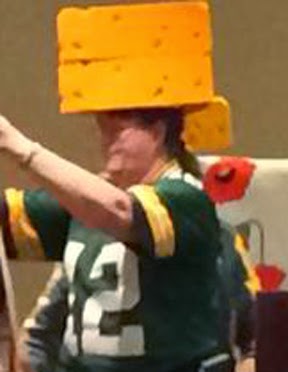
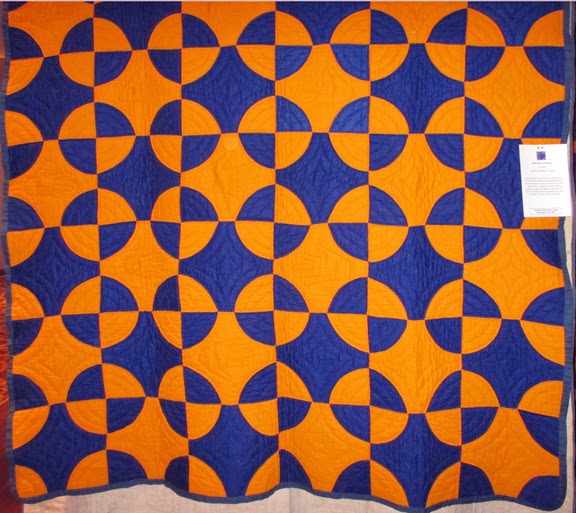
Being in Wisconsin, home of the cheeseheads, 
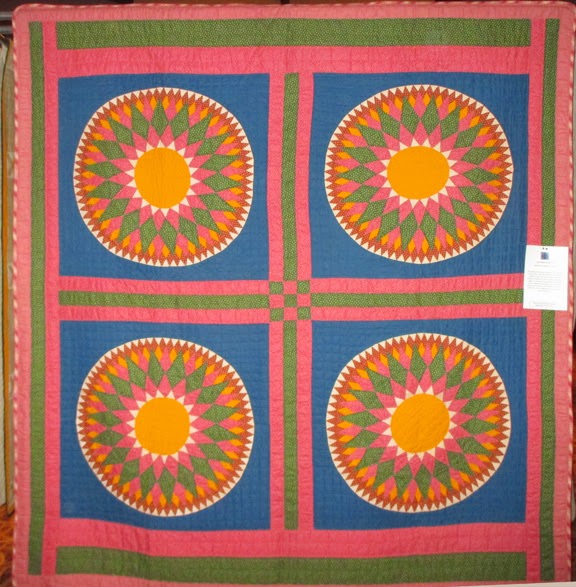
we were treated to a display of cheddar colored quilts.

If you are confused---all you need to know
is it has to do with football.


The first few are from the collection of Seminar co-chair
Carol Butzke of Wisconsin.


Kathlyn Sullivan has collection of North Carolina
quilts featuring the fabric.


Can't recall which collector's this one is.


Above and below, Carol's


The last one is Kathy's.

Textile specialists call the color Chrome Orange after the
dye that created it, but everybody today calls it Cheddar.

Sunday, October 5, 2014

Richmond Reds: Springfield

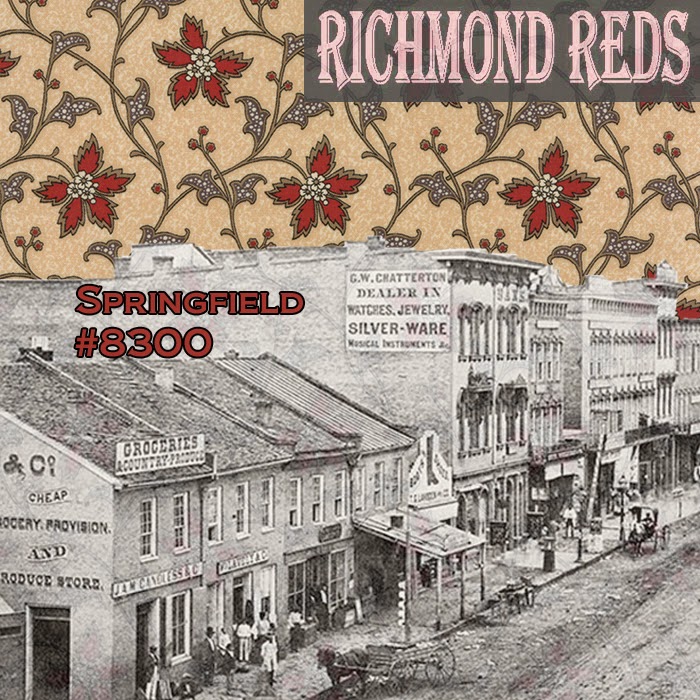
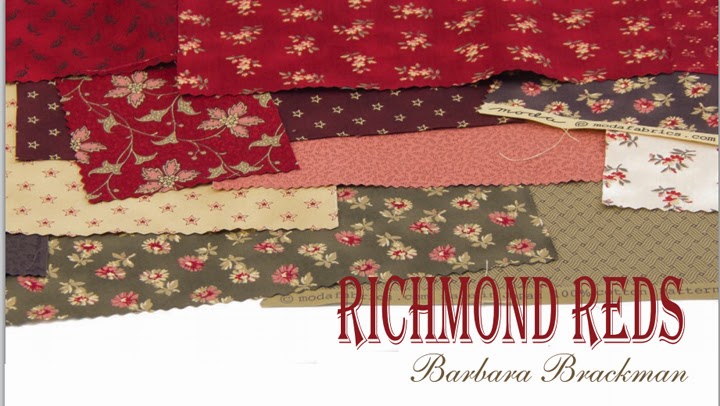
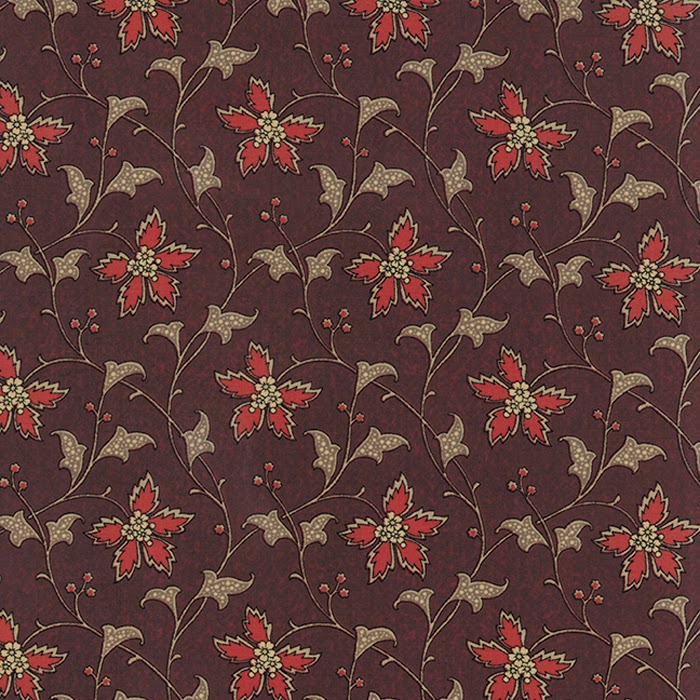
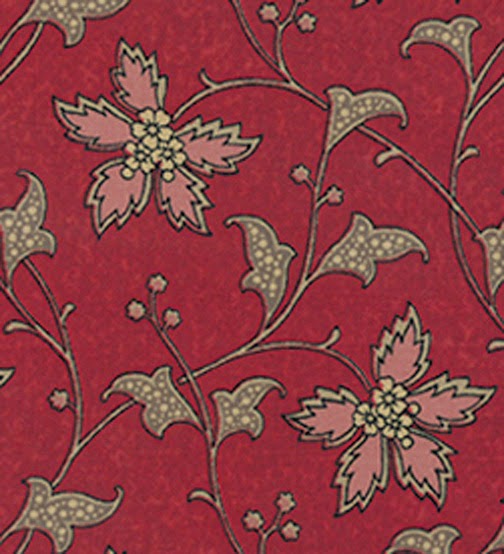
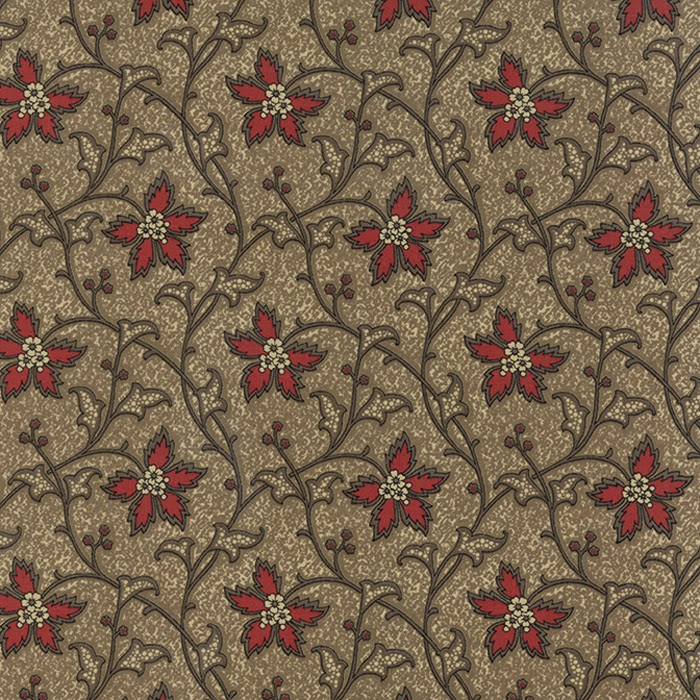
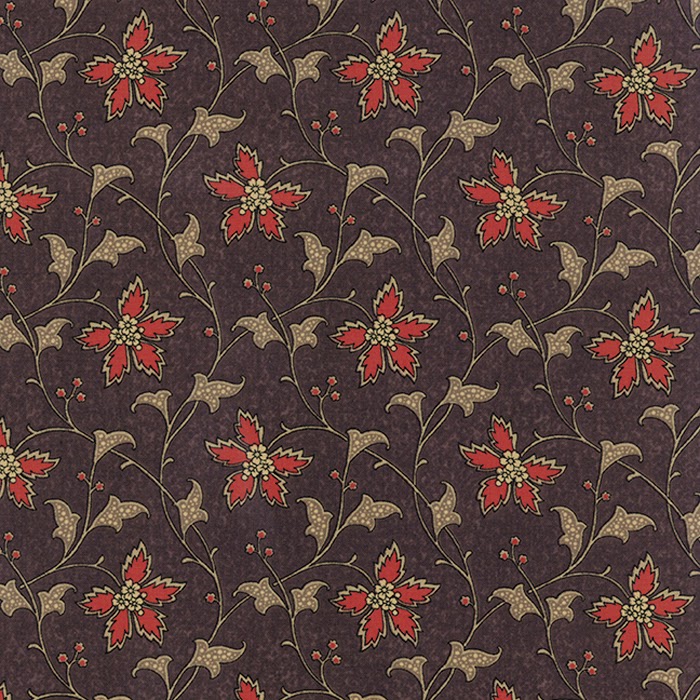
Springfield is the largest print in my new
Richmond Reds collection of repro prints.


Springfield in Mahogany Red

We found the document print in an antique sample
book in the Moda collection. I liked the graceful
tossed repeat and the detail in the original drawing

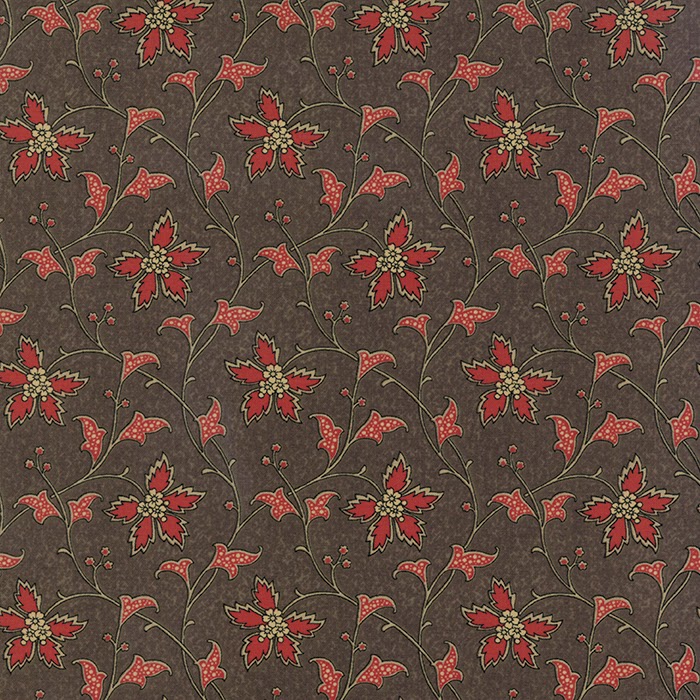
Springfield in Rebel Red
It has a very characteristic middle-of-the-19th-century
look, mainly in the dark outline around lighter stems. The range
of madder shades of creams, reds, tans and chocolate is also typical
of the style.

Bright Star
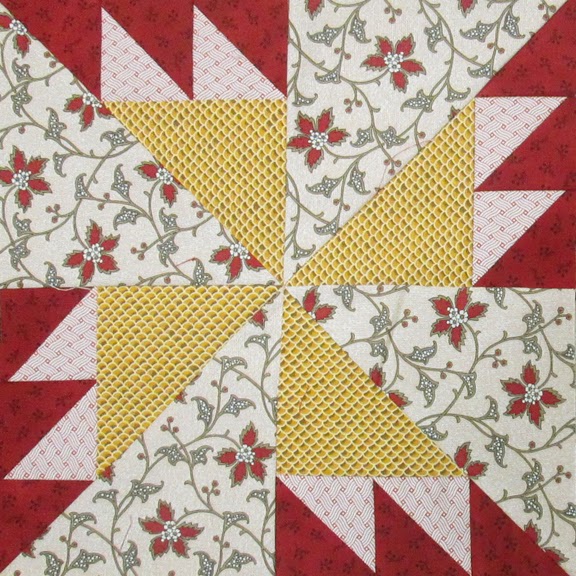
Here Georgann Eglinski has used the Shirting
Cream colorway for her first block in the
Austen Family Album series (see the link to the free patterns in the
left hand column.)

Block 10--Good Fortune

Bronze colorway

Chocolate colorway

Copperplate Colorway

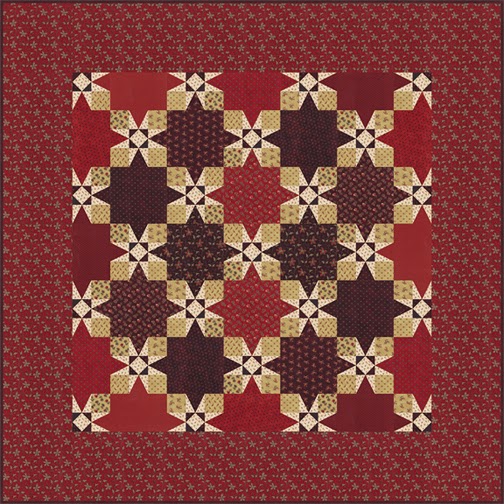
We've used the Rebel Red colorway for the
border in the Richmond Red kit.

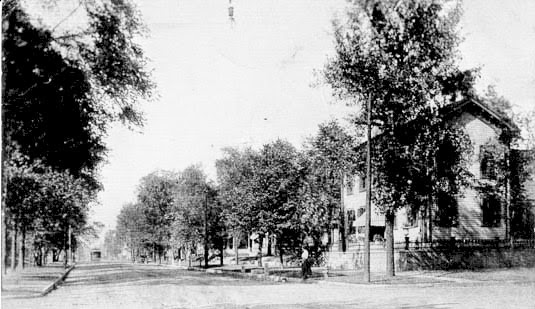
The Lincoln house in Springfield, Illinois

Why Springfield for the print name?
It's Lincoln's hometown in Illinois


but it's also one of the most popular town names in the U.S.,
even if you don't count the Simpson's mythical Springfield.

So if you don't feel good about using the Rebel Red colorway
to remember Springfield, Illinois, consider the print named for 

Springfield, Georgia
or

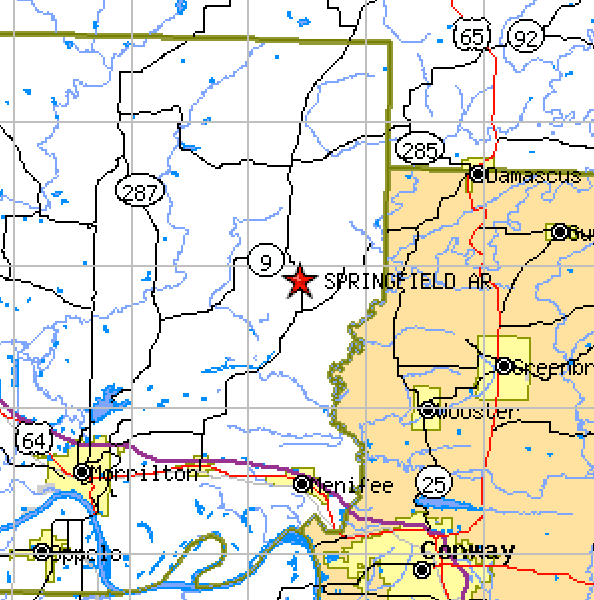
Springfield, Arkansas

Thursday, October 2, 2014

Exhibits: Antique Quilts /Fall & Winter 2014

Robert Doisneau, The Tabou, Paris, 1947

Grab the gang and catch the fall quilt shows 
featuring antique quilts.


California, Los Angeles
Los Angeles County Museum of Art. Big Quilts in Small Sizes. Ten diminutive quilts chosen from the museum's collection. Through January 4, 2015.
http://www.lacma.org/art/exhibition/big-quilts-small-sizes-childrens-historical-bedcovers


California, San Jose
San Jose Museum of Quilts & Textiles. Antique Ohio Amish Quilts from the Darwin Bearley Collection, 40 bed, crib and doll quilts, illustrating the breadth of the Ohio Amish quilt making tradition between 1880 and 1940. November 15, 2014 – March 1, 2015.


Colorado, Denver
Denver Art Museum. First Glance - Second Look: Quilts from the Collection, through March 22, 2015.
Catalog available for $10.95
http://shop.denverartmuseum.org/SelectSKU.aspx?skuid=1061026


Connecticut, New Britain
New Britain Museum of American Art. Let Me Quilt One More Day. "Curated by Dr. Douglas Hyland... over 40 historical and contemporary quilts." Through January 4, 2015,


Massachusetts, Concord
Concord Museum. Behind Closed Doors: Asleep in New England  includes bedding and quilts.
Curated by Jane and Richard Nylander.
October 10, 2014 - March 22, 2015


Massachusetts, Lowell
New England Quilt Museum:
Humorous Quilts: Keeping Us In Stitches, October 9-December 31, 2014,
http://nequiltmuseum.org/home.html

Michigan, Adrian
Lenawee County Historical Museum. Antique Quilt Exhibit, through December, 2014.
http://www.lenaweemuseum.org/uploads/6/9/5/0/6950317/flyer.pdf

Nebraska, Lincoln
International Quilt Study Center and Quilt Museum:

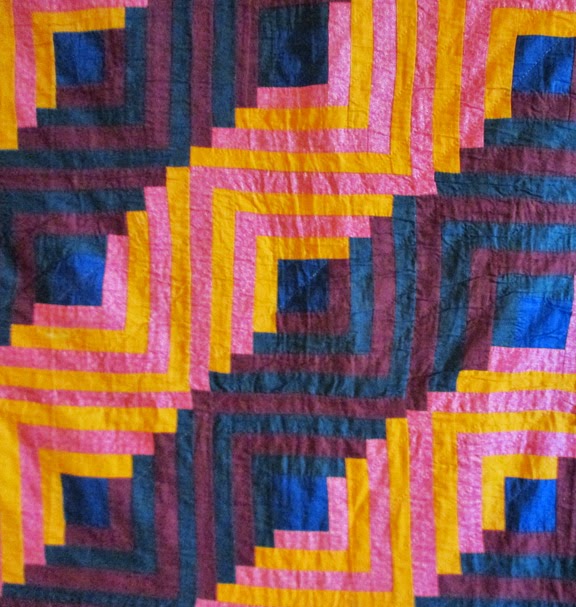
Design Dynamics of Log Cabins from the Holstein collection, through November 29, 2014.

Modern Marvels: Quilts made from Kits, curated by Marin Hanson & Deborah Rake, features 20th century designers, companies, and publications well-known for their kits. Through February 28, 2015.


Signature Cloths, guest-curated by Lynn Setterington, the exhibit "focuses on sewn signatures as visual ciphers and as a method of social engagement, with emphasis on the autographs of ordinary people." Through May 31, 2015.

Vermont, Shelburne
Shelburne Museum:


Homefront & Battlefield: Quilts & Context in the Civil War, through January 1, 2015. This show from the American Textile History Museum will then travel to the Nebraska State Historical Society in Lincoln, opening February 1, 2015.


Virginia, Christiansburg
Montgomery Museum and Lewis Miller Regional Art Center. A Pieced History: Quilts of Montgomery County.  Twenty locally made historical quilts, through April, 2015.


Virginia, Williamsburg
Abby Aldrich Rockefeller Folk Art Museum, A Celebration of Quilts "features dozens of quilts that represent the diversity of quilts made in America from the 18th through 20th centuries. Several of the quilts are new to the collection and have never before been seen by the public."
Through June, 2016.


Wisconsin, Cedarburg
Wisconsin Museum of Quilts & Fiber Arts:  
Jud and Luella Doss Vintage Wool Quilt Collection. October 15, 2014, - January 18, 2015


Washington D.C.
D.A.R. Museum. Eye on Elegance: Early Quilts of Maryland and Virginia
Through September 5, 2015.

Applique Flower Basket dated 1849
by Anna Catherine Hummel Markey Garnhart

Curator of Costume and Textiles Alden O’Brien looks at quilts from Maryland and Virginia in an exhibit of 36 quilts with a focus on quilts from 1790 to 1860, design migrations and the many hands who made the quilts.
http://www.dar.org/museum