QUILTS & FABRIC: PAST & PRESENT


Sunday, May 14, 2017

Past Perfect: Quilts de Légende


Somerset by Marie Francoise Gregoire
Inspired by a quilt in the Victoria & Albert Museum.

This month's Past Perfect post features a group: the French organization Quilts de Légende which as far as I can translate means Legendary Quilts---but I think the meaning is more like Traditional, Fantastic Quilts.

My French is pretty bad. I read just enough to mistake the meaning, so please, French speakers, correct my misinformation if you would.

Le Chapman by Marie Francoise Gregoire:
Another V&A quilt as inspiration.

I picked two of the many master artists to feature as I had shots of several of their quilts
from past years.


Here's what I can figure out.
Quilts de Légende is a branch of Association France Patchwork, the French Patchwork Guild, which began in 1984 and now has 12,000 members. Every other spring the group holds a special exhibition, usually in Brouage, France. The exhibit is up now until June 11th at La Tonnellerie & la Poudrière.

2017 is the 9th version for the juried exhibit, which is held every other year and travels through Europe. The current theme is QUILTS XIX Début XX Siècle. My translation: Quilts From the End of the 19th Century into the 20th.

Evelyne suggests looking at Linda Collins's Instagram page. She posts a quilt everyday and has been documenting this year's Brouage show:
https://www.instagram.com/quiltaday/

And Francoise tells us: The show will travel to "St Marie aux Mines(France), half septembre"


Alabama  by Marie Francoise Gregoire.

Participants have been making reproductions of American quilts from that period for this year's competition. There are stringent rules for entry:

Page Botanique by Louise-Marie Stipon,

inspired  by Ernestine Eberhardt Zaumseil 's quilt 

at the Metropolitan Museum of Art

Sue Garman described the rules:
"The quilts are all reproductions of antique quilts from Europe, Australia, and the United States. The rules for entry state that every quilt must be an exact reproduction of an antique quilt, using fabric as true to the original as possible, and they must be made entirely by hand: no machine piecing, no machine quilting, no machine assembly, no machine binding. Every stitch in the quilt must be done by hand. Knowing this makes the quilts, indeed, legendary."

Quilting by Louise-Marie Stipon

Teri & Kara at the Needle'sEyeStories blog interviewed curator Catherine Bonte who said:
"The quilts must be made from a picture in a book or a museum, without kits or patterns. All of the work is by hand; no machine stitching is permitted. The members' work is strictly judged for quality of stitches, including quilting....the quilts included in the exhibit are 'the best of the best of the best.' "

Floral Sampler by Louise-Marie Stipon.


Needle manufacturer Bohin sponsors the exhibit which travels all over Europe. You may have seen one bi-annual version at the Quilt Festival in Houston.

It is wonderful that the French quiltmakers have so much respect for our quilt history and for handwork. (No matter how many times you read the cliche, handwork is NOT a dying art.)

The question might be: Why do we not have a similar exhibit in the United States? The prestige of being accepted is incentive to do a lot of handwork and studying antiques. The closest thing is AQSG's bi-annual challenge (this year on solid color quilts.) The rules are not so stringent and the repros are smaller.
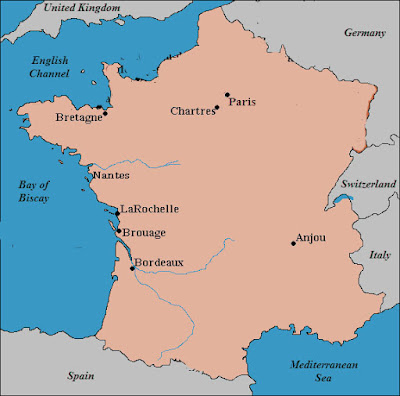
Brouage is an old fortified city on the coast of the Bay of Biscay, about 183 kilometers from Nantes (114 Miles) so one could visit the quilt fest in Nantes, Pour l'Amour du Fil, and the exhibit in Brouage in the same trip--- some spring in an odd numbered year.. 

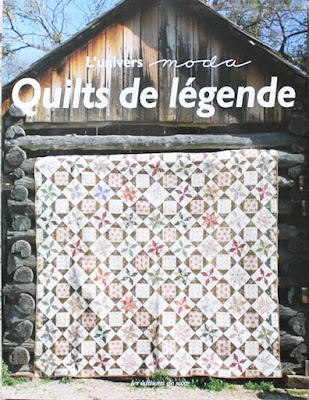
UPDATE: This book is a catalog of the Moda quilt collection.
Same name however.

There's a book from Moda and Linzee MacCray in 2012.
Quilts de légende : L'univers Moda by  Linzee Kull MacCray

UPDATE:
Françoise Lietaert has corrected several errors.
1) that Moda book has nothing to do with the Quilts de Legende exhibit I am talking about..

2) The quilts do not have to be exact copies.

LINKS
France Patchwork's blog:

Wednesday, May 10, 2017

Oh! To Be in Cairo in 1880

Detail of a quilt that political textile collector
Julie Powell donated to the Boston Museum of Fine Arts.


Oh to be in Cairo. 
Cairo, Illinois that is...
(Pronounced Karo)

When Stuart's Dry Goods had the following for sale:
  • Robe Prints
  • Patchwork Prints
  • Comfort Prints
  • Handkerchief  Prints
  • Hancock & English Prints
  • Garfield & Arthur Prints


Garfield & Arthur print for the 1880 Presidential Election


James A. Garfield was President for about 200 days in
1881 until he was assassinated.
The above top with cut-out chintz detailing is a mourning quilt.

The Hancock and English prints are not what I first thought---prints from England. Winfield Scott Hancock and running mate William H. English had their own campaign textiles too.
Hancock and English bunting
[Not Turkey red]

We can't call Republican Garfield the lucky winner in this contest. But he is the winner in number of campaign fabrics and quilts.

The Garfield quilt in the Museum of Fine Arts.
Two stars picture Garfield; two Arthur

As far as the rest of the inventory at Stuart's: 

You often see robe prints (think lap robe prints)
as whole cloth, tied bedcovers or on the back of patchwork.

Robe Prints and Comfort Prints were probably quite similar. We might call them chintz-scale prints. They might have also called them cretonne. I'd guess that a robe print might be slightly better quality than a comfort print.

Handkerchief prints may have been bandanas.

Bandana or handkerchief for Garfield/Arthur supporters.

Bandana or handkerchief for Hancock/English supporters.

In the outside border of each is a caption in white.

The Garfield banner says Cochrane's Turkey Red.

Cairo is at one of the most important river junctions in the U.S.
where the Mississippi meets the Ohio....
Important when rivers were our highways.
Bad news in a flood year.

Saturday, May 6, 2017

The Classic Early American Quilt

Nine Patch quilt dated 1806 by Charlotte Roe,
Virgil, New York.
Smithsonian Institution


Our patchwork quilt traditions derive from Europe, particularly England and the Netherlands. With many unsigned early quilts found in the U.S. it's hard to say if the maker lived in York or New York.
But Charlotte Roe left us clues in her quilt, including the name of her town. The style---a simple nine-patch arranged block style---is also a clue to where she lived.

Nine Patch dated 1808,
Ester O Carver


If one were looking to make an early American quilt, this design would be
a good choice.

Nine Patch dated 1808 with initials A.T.E.
Collection Old Sturbridge Village Museum

The date on A.T.E.'s quilt.

The block can have a center square wider than the corner squares...

Nine Patch dated 1802 from Gammage Antiques, Maine.

Or nine squares of equal sizes

You would alternate the blocks with plain white fabric,
Setting them either on point or on the square.

The earliest example in my photo collection is the only 18th-century version, attributed to 
Elizabeth Bowman Nace of  Hanover, Pennsylvania. Hers is dated 1786 on the reverse.

I'm always less confident of a date on the back of a quilt as
someone might have recycled a bedsheet or other household linen
for a backing at a later date.

I wonder if so many nine patches survive because they were a girl's first quilt---kept for sentimental reasons. But Elizabeth Elizabeth Bauman Neas (or Elizabeth Bowman Nace) was not a girl in 1786. She was born in the 1740s so would have been in her forties when the quilt was made. 

Elizabeth Bowman Nace (1741 - 1815)
Here's her grave in Mount Olivet Cemetery, Hanover, York County, PA

The Neas House in Hanover still stands.

The British Quilt Guild collection has 69 quilts made before 1840 in their online files. Not one is a nine patch set block by block.

Seen at the Vermont Quilt Festival.
Estimated Date 1830s.

So when you see one of these nine-patches with early prints you can assume it is American-made and feel pretty good about dating it from 1780 on, depending on the fabric.

Red & green & a scalloped edge
Perhaps 1845-1890

But do remember there's no late cut-off date. Quilters continued
to make nine-patches  alternated with plain white squares throughout the 19th & 20th centuries


Here's an early nine-patch without an inscribed date but family history indicates it was made by Lavina Ensign (Woodruff Westover), begun when she was 5 in 1795.
See more at the Litchfield Connecticut Historical Society:

Wednesday, May 3, 2017

Clarissa Moore: Where are the Eagles?

Quilt date-inscribed 1837 by Clarissa Moore Holman
Collection of Old Sturbridge Village

See a great photo of it here:


Froncie Quinn has done a pattern for Clarissa's quilt. Here's her description:
"Clarissa's scrap quilt (107" x 105") will inspire you in many ways. It is unusual because of its New England based " T" -shaped construction and enchanting because of the charming stenciled designs sprinkled throughout the quilt. Created when Clarissa was just 17, it is a veritable showcase of the fabrics and motifs of the time period."
The date is stenciled.


Clarissa D Moore was born in Tolland, Connecticut on July 13, 1819. She married John Holman (1819-1896) of Eastford, Connecticut, on October 28, 1847. They had one child.  She lived with Ida and Henry Baker Buell in Eastford in her later years. When their daughter Edith Clarissa was born in 1898 she gave the Buells her star quilt.  Clarissa Holman died on January 16, 1912 and is buried in the North Ashford Cemetery in Windham County.

I thought I recognized the red fabric in Clarissa's alternate blocks and you may too.

Here is a wholecloth quilt in a similar print featuring eagles.

A strip quilt alternating eagle print with a pillar print perhaps.
From the Massachusetts Project & the Quilt Index.

The eagle print was popular enough that several quilts and pieces of the yardage
have survived in a few colorways. Above: a red ground with green and brown figures.
Note the upside down cornucopia and the serpentine stripe of florals between the eagles.

Same print with a chocolate brown ground.
The most noticeable figure is the American eagle in an oval wreath with a pinked edge.

You can't miss the eagle.

 
Two colors in a nine patch from the Pat L. Nickols
Collection at the Mingei Museum.


The eagles are missing in Clarissa's quilt where there are only pinked edges to be seen.

See the pinked edge in the lower left corner of this photo.

Did she cut out all the eagles?
Did she have leftovers from another project?
Or was her red print an alternate design without the American eagle?

The last answer is probable.  It would make sense that a European mill
might print an eagle for the U.S. market and alter the design for the rest of the world.

Here's another version of the eagle print.

Same eagle but the brown ground print has a different image where the
cornucopia is on the red ground print.


If you look closely at the photos of Clarissa's quilt, however, you see in the block above and to the left of her signature block an oval shape at the top. It's not an eagle's wing. so we have to guess that Clarissa had a different print.

Once you start seeing a print you keep seeing it. Now I notice this strip quilt
in the collection of the International Quilt Study Center and Museum (#2005.012.0001)
 features a print close to Clarissa's in the chintz strips. No eagle to be seen.

Below another in the IQSC collection:

#1997.007.0632

No eagles. This is probably the same print Clarissa cut up.
Both the eagles and the no-eagles print must have been quite popular.

Has there been a repro print of the eagle chintz?

A black & white shot from the collections of Historic New England.

I think I've solved the puzzle of the missing eagles. Several similar prints. I'll go on to some new obsession.

See the pattern for the star quilt with stencils from Hoopla Patterns:

Update on the Reproduction Prints

Wendy & Cyndi remembered two reproductions:


Nancy Gere did a repro of the eagle print in her Old Glories: 13 Original Colonies.


Moda did one called Georgetown (not by me)

A couple of years ago they saw a show of Rhode Island quilts at the New England Quilt Museum that featured a display of the old fabric and new with a whole cloth quilt and this label.


I found it at Cyndi's Busy Thimble shop blog
http://busythimble.blogspot.com/