QUILTS & FABRIC: PAST & PRESENT


Wednesday, August 13, 2014

Postcards From Abroad


Roseanne and I recently went to England and France.
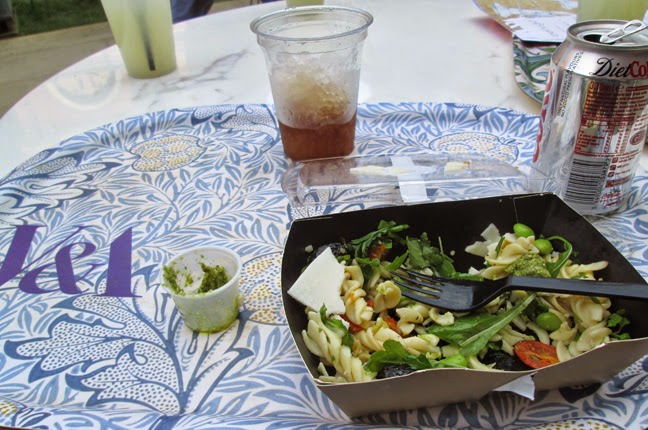
Here we are at the Tate Modern eating lunch.

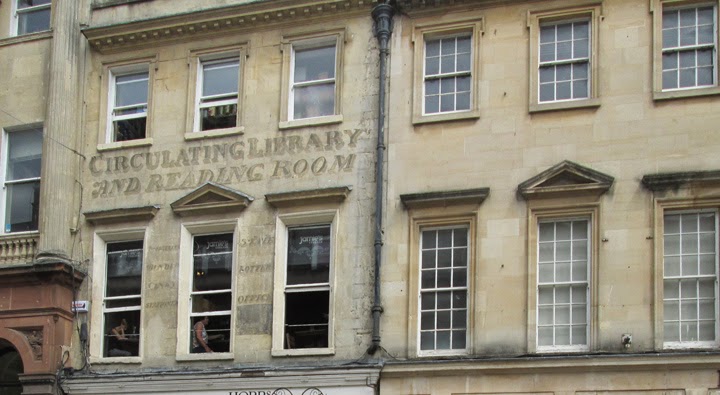
I had several travel goals...one was to follow in Jane Austen's
footsteps to Bath.

Another was to see some Arts & Crafts and modern
decorative arts at the Victoria and Albert Museum.
The lunch room has William Morris trays.

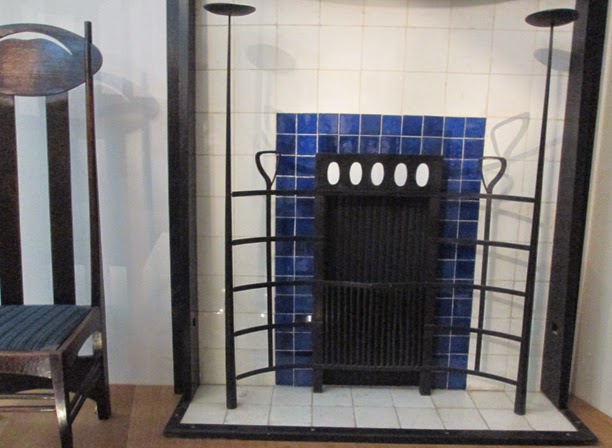
A fabulous Margaret and Charles Mackintosh piece.


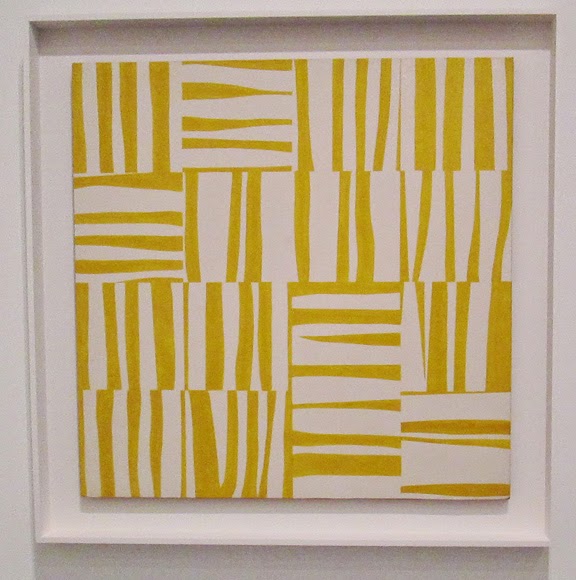
We went to a lot of art museums. I liked the Tate Modern's Ellsworth Kelly
collage (Gironde), which looked quite familiar. He cut up painted paper
to make it in 1941.

I took 500 pictures of which about 100 are usable. Be prepared
to sit through more postcards from my vacation later.

Saturday, August 9, 2014

Emporia Quilts: Rose Kretsinger's Pennsylvania Beauty


Pennsylvania Beauty by Common Threads in Waxahatchie

We put this dynamic block in the center of our Emporia Rose applique quilt.

And on the cover.

Unfinished quilt top by Rose Good Kretsinger
Collection of the Helen F. Spencer Museum of Art at the University of Kansas
Rose never finished her version. She usually found her patterns in antique quilts and this one must have caught her eye because it fills up the square block nicely. 


Many of the mid-19th-century applique patterns are based on Germanic folk arts which use regular symmetries to fill an area with pattern.


Ina Mae Carney's version

This block is unusual in its construction with a central
flower and four stems coming out.

Here's another design with a central flower and four stems.

They aren't too common because the aesthetic here was to fill up the space.
Four stems or motifs tended to leave a lot of white space.

Central flower/4 stems


Filling up the whole block successfully using four arms took some skill.


The common design solution was to add a little something--
a 4 plus 4 design.

Here's a popular 4 + 4 pattern, Mexican Rose...

Even more popular---the Democrat or Whig Rose. The rooster comb
fits into the empty space: 4 stems plus 4 combs.

One graceful way to fill space with only four arms was
to curve those arms. The quilt above is the closest I've seen to Rose's block.

Pennsylvania Beauty by Karla Menaugh

If you design your own applique you might try
an exercise in making a center flower with whirling arms.

If you don't design your own applique---use the pattern from our book Emporia Rose.

The Common Threads shop is offering a monthly kit
for their new version. Click below for more information about
the ten-month program, which begins in November, 2014.

http://webstore.quiltropolis.net/stores_app/Browse_Item_Details.asp?Store_id=541&page_id=23&Item_ID=13965

Tuesday, August 5, 2014

Winnetka: Richmond Reds

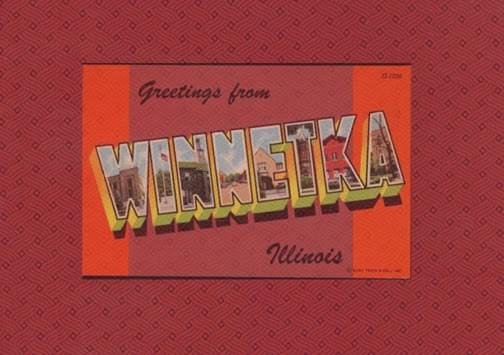
Winnetka is #8305 
The picture of Winnetka, Illinois, is from the Winnetka Historical Society.

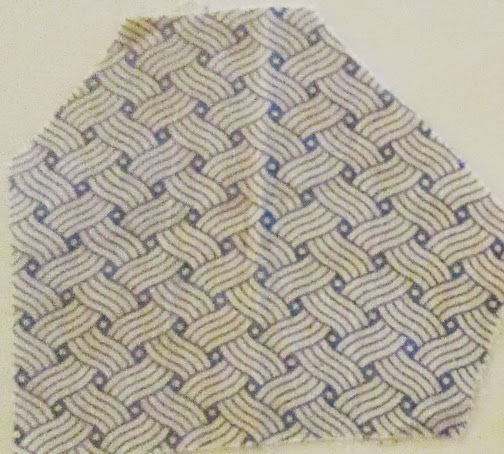
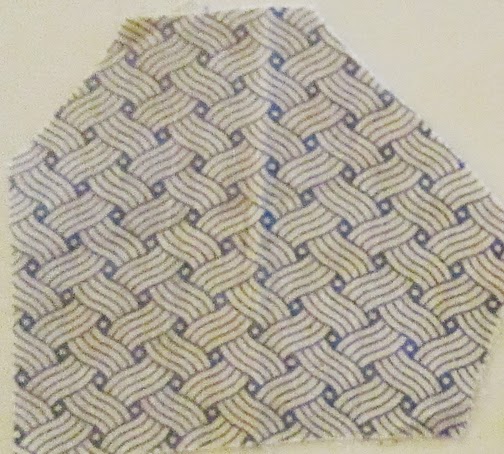
The basket weave print in my new Moda collection Richmond Reds is reproduced from a scrap of cotton printed in periwinkle blue on white. Because this collection leans towards the warmer side of the color wheel we colored it in eight different shades of madder style reds, brown plus an olive.

The document print


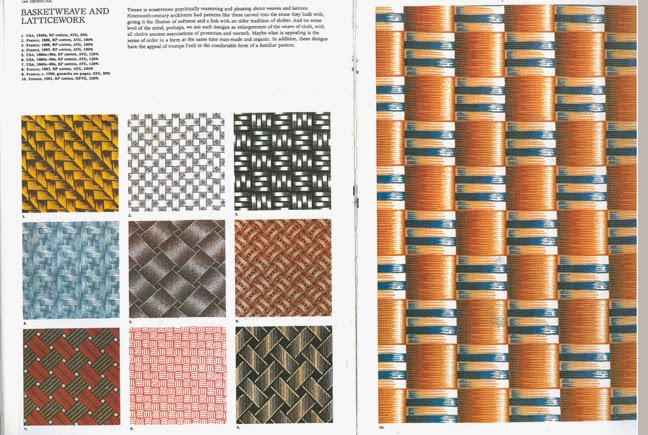
Pages of "Basketweave & Latticework" from 
Textile Designs: Two Hundred Years of European and 
American Patterns for Printed Fabrics 
by Susan Meller and Joost Elffers

In their index to print style, Meller & Elffers classify basketweaves with latticework.

The idea of a textural illusion has long been an important part of printing fabric.

Lane's Net is a popular print with a texture that dates back to the early-19th century.

Roller printing's detail allowed print designers to go all-out in creating a 3-D image.

Basketweaves continue to be popular with designers and customers. The print style is less of a clue to date than the color. The green print above is a mid-20th-century feedsack.

The blue-violet in my document print is a good clue
to 1870-1890, but the print is such a classic, especially in madder-style reds and browns,
that you could use it in any 19th-century period quilt.


Why Winnetka? For this line and the next I picked names of American towns
with a nice lilt. There's a Winnetka, California but I was thinking of Illinois.


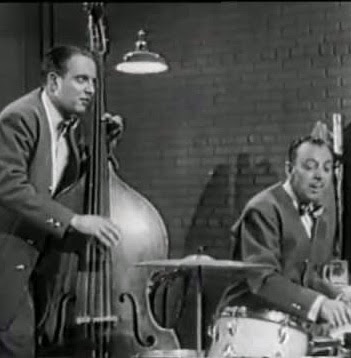
As was the Bob Crosby band. Listen to the jazz song "Big Noise from Winnetka," written in 1938 by Bob Haggart and Ray Baudac.  They must have liked the sound of the word too. Click here for a YouTube video.
www.youtube.com/watch?v=Gzwoc7UWdBw

Friday, August 1, 2014

Star Pattern Without a Name


Or a number!

It's a common pattern, a variation on the Lone Star or Star of Bethlehem
with what we tend to call "satellite stars" in the corners and edge triangles.

Pennsylvania 1880-1910


Quilt dated 1838-9 Moore
Winterthur Museum
Here's the earliest date-inscribed example I've found

Most seem to come from the Pennsylvanians 
about 1880-1910 or so.

Stauffer family, Mannheim Pennsylvania

The North Carolina project uncovered a few.

The Metropolitan Museum of Art has a terrific example
they call Star of Bethlehem


The same name the  International Quilt Study Center and Museum
gives this Pennsylvania variation.


But Star of Bethlehem really just refers to the category of large stars of diamonds
(BlockBase #4005)


Example from the Abby Aldrich Rockefeller Museum
at Colonial Williamsburg

How could a pattern so distinctive, so early and so common go with an unrecorded name?

My guess is that pattern names were recorded (or made up)
by designers selling quilt patterns beginning about 1880. This complex star with
stars would be hard to show as a block and hard to
draw up or kit up.


By Lydia Hall, about 1900,
 from the Wyoming project and the Quilt Index.

I can't give it a name but I can assign it a number. I'm writing #4005.5 in my copy of my Encyclopedia of Pieced Quilt Patterns.
Philadelphia Museum of Art
I'm lumping in all the variations with different stars and sunbursts.


Marlo Miller has been looking for a pattern name for
this quilt pictured with Grandma----
"4005.5 variation" isn't very romantic but it may have to do.


Monday, July 28, 2014

Shirting Document Print for Richmond Reds

Raleigh print in Shirting Cream

My new 19th-century reproduction Richmond Reds collection for Moda
is due for delivery mid-September, 2014

which means the precuts like Jelly Rolls and Layer Cakes should
be available soon.

There's a full-page ad for it on the first page of this months
Quilt Mania.

Several of the prints are available in a "Shirting Cream" colorway, such as
Raleigh (8304-11)


Here's the original document print for Raleigh--- a shirting with berries and sprig figure in a dark brown or black. Over the many decades the background has yellowed as cotton does with age.
We kept the aged look in some of the colorways, adding a touch of pinkish tan because the line is called Richmond Reds.

A shirting is a term for a light colored fabric with a simple, small figure.


This colorway is an echo of the very serviceable 19th-century
shirtings that were so popular for children's clothing
as in this lot from Augusta Auctions that look to be from the time of the Civil War
or earlier.


The fashion continued into the 20th century, Many of the kids in this one-room school from 1909 are wearing light prints.

Shirtings were also a necessity for scrap quilts.


All these auction quilts look to be about 1870-1920,
shirting's heyday. 


And not so scrappy quilts until 1930 or so.


See another post about vintage shirtings: