National Museum of American History
Smithsonian Institution
Quilt date-inscribed 1795 M Campbell. Detail.
The dark brown is reverse applique with
the light overlay cut to reveal the print underneath.
Considering stitching a period reproduction of a quilt for the 250th anniversary of democracy this year? I've been looking at museum quilts that reflect the first 25 years of American independence and have come up with a couple of ideas. See posts here:
https://barbarabrackman.blogspot.com/2025/11/250th-anniversary-quilt-pattern.html
https://barbarabrackman.blogspot.com/2025/12/knickerbocker-puzzle-early-american.html
Further digging has inspired me to include a third pattern. Rather than a a patriotic eagle in the center a vase with a spindly floral bouquet seems to be most appropriate based on reliably dated patchwork quilts from the first years of our independence.
D.A.R. Museum Collection
The vase at the top of the post is reverse appliqued, a technique requiring skill. Are the rest of the early versions reverse appliqued rather than conventional, onlaid applique?
A pattern below with many of the common designs seen in the five similar quilts:
- Floral container with handles
- Various flowers and leaves on long stems
- Symmetrical arrangement (2 way bilateral symmetry)
- Repeated elements such as the 8-lobed rose, tulip and an iris-like floral
- Applique image is cotton with dark brown (plum, chocolate) background & floral print, popular at the time for women's garments.
Collection of Historic Deerfield
Gown 1780-1790
Digital sketch of the central vase in Hannah John's star medallion,
date-inscribed 1797 documented by the Maine project. You can see
Hannah's bouquet is taller and rangier than the pattern here.
Art Institute of Chicago Collection
Detail :Bedrug attributed to Hannah Johnson (1770–1848)
New London County, Connecticut, initialed & dated 1797.
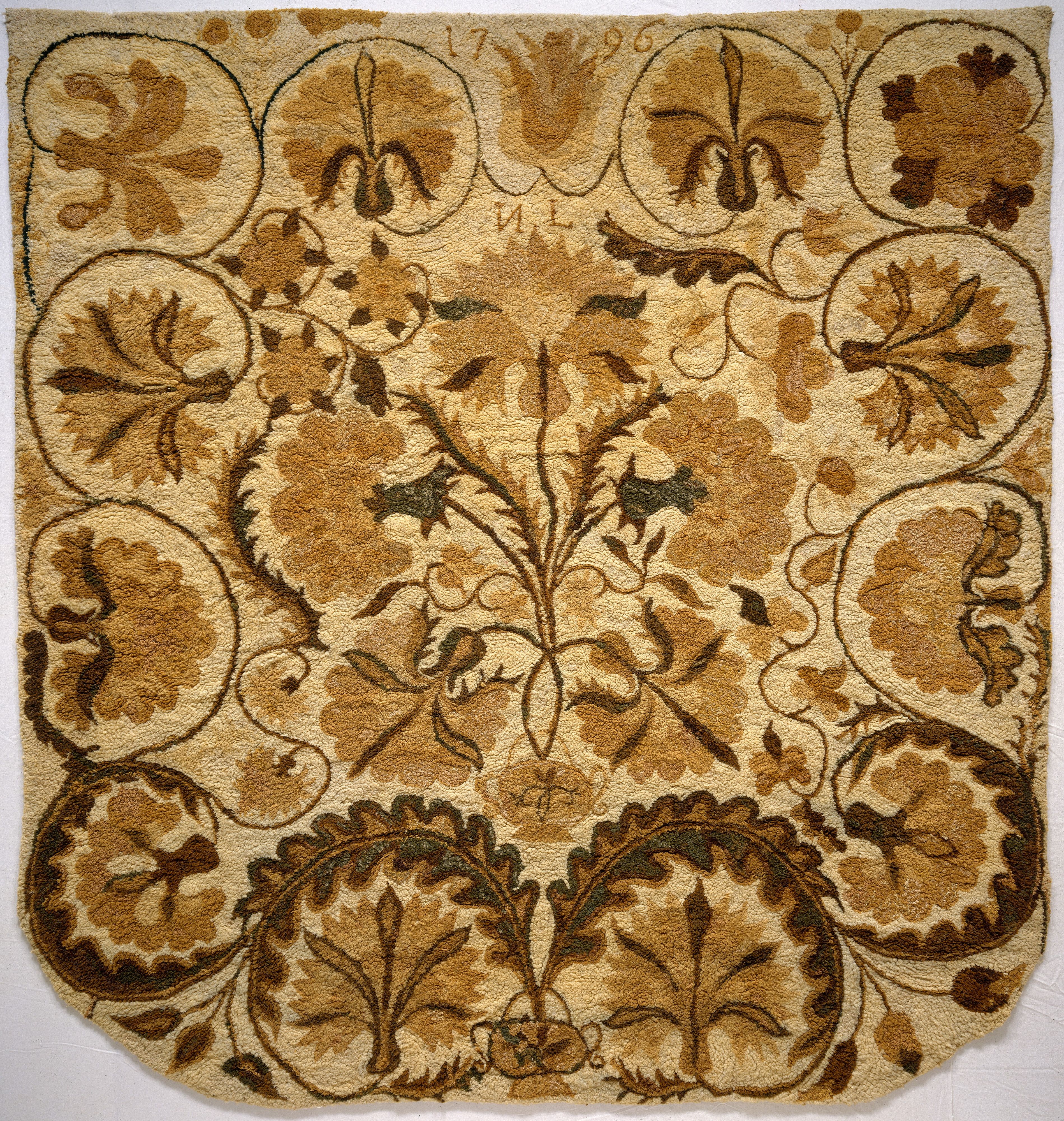
Lynne Zacek Bassett, the expert on American bed rugs that preceded patchwork quilts as popular and valuable bedcovers, reminded me of common design in these woolen spreads. This one by Hannah Johnson is similar to Hannah John's 1797 patchwork quilt.
Metropolitan Museum of Art Collection
As is this bedrug dated 1796 with initials NL, attributed to Connecticut.
Caption from Lynne's 2022 exhibit at the Florence Griswold Museum
New London County Quilts & Bed Covers, 1750–1825
The visual and biographic coincidences led Lynne to realize that American women in the newly independent state of Connecticut were embroidering copies of European loop-pile bedrugs in a regional fashion in New London County, probably obtaining patterns and instruction in needlework classes. That explanation also may explain similarities in the patchwork vase quilts. A needlework teacher offered a popular pattern and/or lessons....
...to the first generation of American women enjoying
new access to European prints
Below are two sheets to print on 8-1/2 x 11" paper.
The finished quilts are small but do see this pattern for more borders.
------------
Another border option is a dog-tooth applique border they called Van Dyck style trim.
Jeanna Kimball shows you how to stitch a period border in her Ultimate Visual Guide
The footed vase a standard image for centuries


Barb, my appliqué group was just discussing a 250 commemorative quilt last week…nice suggestion. Cheers, Louise
ReplyDeleteI'd love to see you guys make a period piece.
Delete