QUILTS & FABRIC: PAST & PRESENT


Monday, August 15, 2022

Cotton Shortages in World War II & After


"Farm girl leaning on wagon," near Morganza, Louisiana, 
Photo by Russell Lee, 1938, Library of Congress

If you look online for "feedsack dress" this photo comes up often but no where does the caption tell us that she is "wearing a dress made from reused flour sacks." It just looks like it should be a flour sack dress; she looks so resourceful in her rural environment.
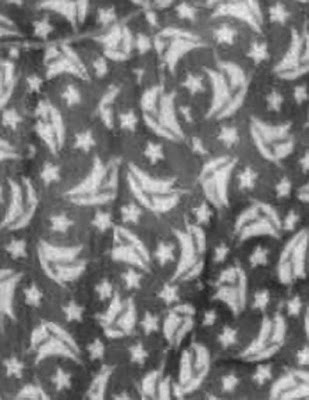
 
The dress print: Nautical figures---sailboats and stars

Or as Eleanor Beard's advertising for her Kentucky quilt business described Southern culture, the girl and her dress speak of the "unspoiled AngloSaxon sturdiness of [rural Southern] people."

The photo looks to feature a teenager who might be quite affronted by your sentimental interpretation of that dress. She is up-to-date fashionable in her modern cotton print. Describing it as recycled feedsacks might be illogical as well as rude. A dress like this for a size 10 human would require 4-1/4 yards of 36" wide fabric. At least 4 identical sacks. 
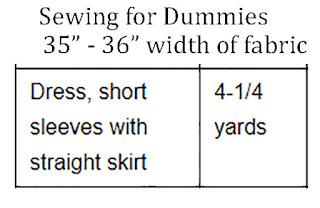
Linzee McCray tells us the standardized World War II 100-pound (45.40 kg) bag provided slightly more than 1 yard (0.915 cm) of material.
https://trc-leiden.nl/trc-digital-exhibition/index.php/for-a-few-sacks-more/item/120-4-feedsacks-during-the-second-world-wara
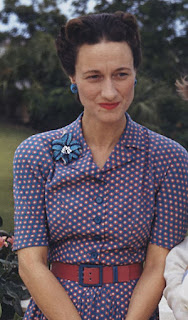
Wallis Warfield Simpson as First Lady of the Bahamas
during World War II
And would you disparage the Duchess of Windsor by
describing her dress as recycled feedsacks?

The print
Small, colorful figures were the fashion

Sentiment and biased assumptions follow any discussion of clothing from recycled sacking material, particularly the dress print sacks that were introduced about 1938.

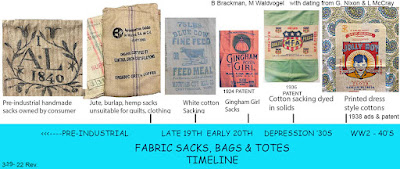
Timeline of commodity containers by Merikay Waldvogel & me.

Many will tell you of Depression-era clothing made from these colorful prints but during the darkest days of the Great Depression in the first half of the 1930s sacking for flour and feed was generally white or plain colors (after 1936).
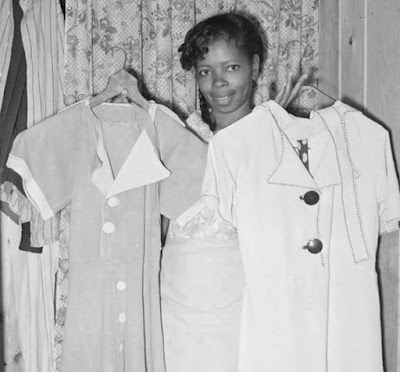
Another Russell Lee photo from the Library of Congress
"Wife of Farm Security Administration client holding 
dresses which she made from flour sacks. 
Sabine Farms, Marshall, Texas, 1939." 

The unnamed woman's dresses are what what one would expect of 1939 fashion; one looks to be a solid pastel with white trim and the other of white sacking with embroidered trim. She might have dyed the pastel dress or had enough "Tint-Sax" bags of one color to make the dress.
(Notice how fashionable cotton dresses with short sleeves and belts were at the time.)

Texas ad in 1938. Penney's sold plain-colored flour sacks 
without the flour.

The Great Depression was a collective trauma that generated many family stories from those who lived through it, but most of the tales of feed-sack printed dresses really do not come from the 1930-1939 years but the ten years afterwards---1940 to 1950. For some reason the stories of fabric shortages during World War II and afterwards do not resonate like stories of poverty.

1944 may have been the low point in textile availability for the shopper.

Fabric shortages are rarely remembered during the war that started in Europe in summer, 1939  although there is a good deal of documentation about having to make-do in this second national trauma.

Silk and nylon were just about unavailable but cotton was also hard to obtain.

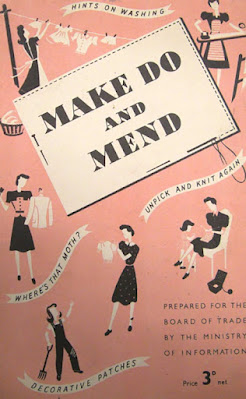
Cotton fabrics were rationed in Great Britain
along with wool and silk.

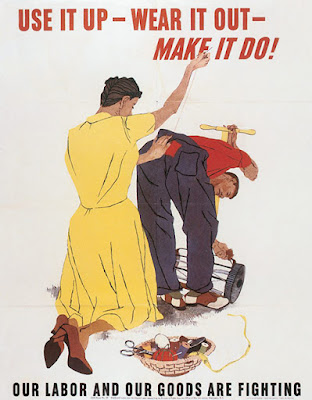
U.S. Poster with the same advice

The U.S. did not ration cotton but many items required ration points. As a child born right at the end of the war I heard family stories about the hardships without rationed gasoline, tires, meat, nylon stockings, shoes and sugar.
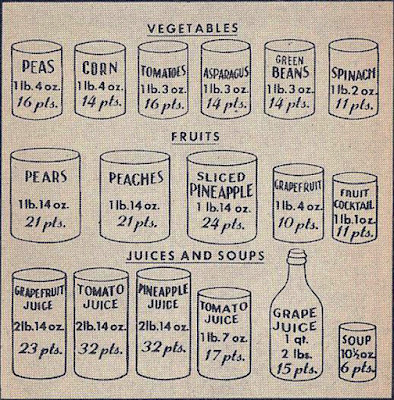
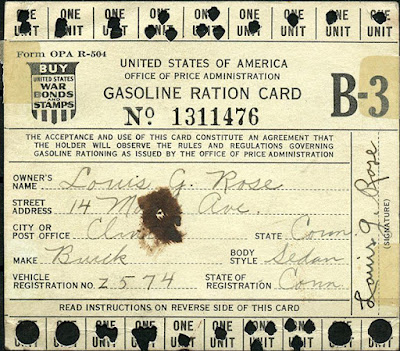
Food cost you ration points as well as cash.

What was the gas mileage on the Mr. Rose's Buick Sedan?

Library of Congress
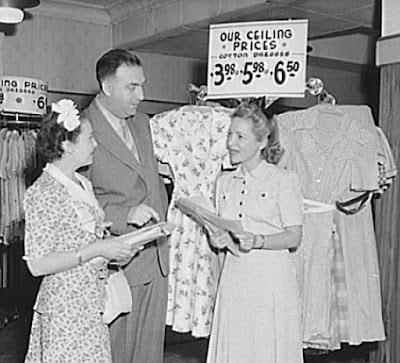
Government employees checking on war-time prices

Even though cotton yardage and cotton clothing was not rationed in the U.S.
there were many other regulations in effect during the War.


Government agencies dictated mill production, fabric use and price.
Most cotton went for the above uses.

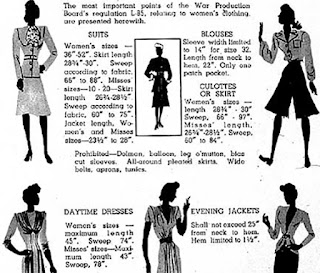
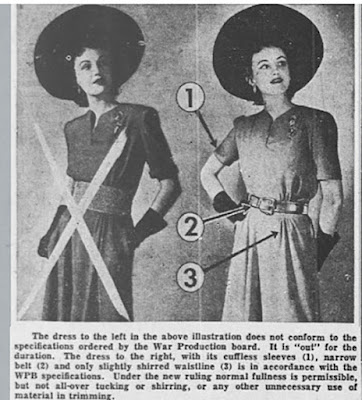
The 1942 "Yardstick" dictated whether pants and sleeves could have cuffs or not (Not!)
The War Production Board wrote clothing regulations with instructions
in minute detail.


But it wasn't just a general cotton deficit that influenced the use of recycled commodity sacking in clothes.


In 1942 laws recognizing the importance of commodity containers over civilian fashion gave priority to cotton prints intended for sacking manufacturers.
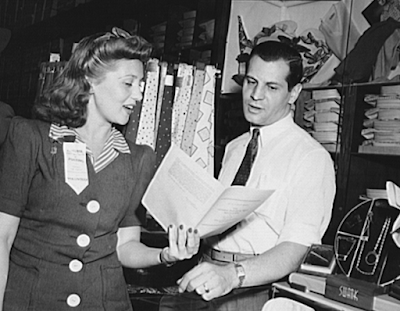
Library of Congress
1942, explaining the regulations
Her dress seems to have cuffs and patch pockets---both "unpatriotic."

In addition, an earlier law forbid the use of used sacks to contain anything humans might eat---flour, sugar, etc.
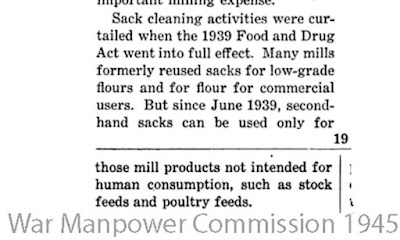
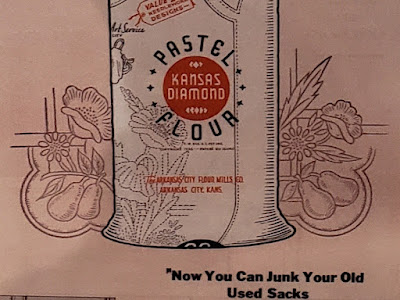
The 1939 law limited the trade in used sacks---bag manufacturers were not as motivated to buy back used flour or sugar bags. Therefore, once you ate the commodity and washed the sack it was not returnable. 

Sack with an embroidery pattern

All these rules resulted in an increase in clothing made from the recycled print sacks and plain. Fortunately the container industry had developed technology for the innovative print sacks before the war and made the most of print sacks during it. The stories we hear about having dresses made of "feed sack print" are from the 1940s and '50s. (Textile production continued problematic even after the war.)
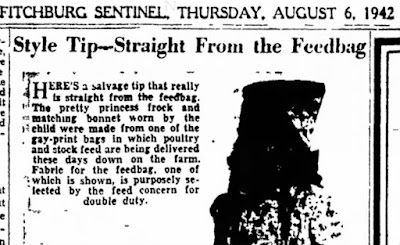
Fitchburg Massachusetts, 1942

Fremont, Ohio, 1944

The regional variation in terms makes searching for information
a bit complex. "Grain bag" versus "feed sack," depended on where you lived.

Wednesday, August 10, 2022

Ella Maria Deacon's Quilt & The Hicksite Quakers


Art Institute of Chicago Collection
Quilt dated 1841-1842

In 1841 a large group of related people in Burlington County, New Jersey and Philadelphia did a rather innovative thing---they contributed their names, affections and sewing skills (and perhaps some cash if they had no sewing skills) to make an album quilt, converting the popular idea of a bound autograph album to a bedcovering.

Bound albums were standard gift items from family members and suitors.

Paper album book published in 1841

The recipient of their stitched efforts was Ella Maria Deacon (1811-1894), a single woman about 30 years old. The occasion for the gift is unknown. The caption at the Art Institute reads: "The quilt may have served as a farewell gift on the eve of the recipient’s marriage and ensuing move."

But Ella never married and she never left Burlington County, common events associated with album quilts as gifts.

Several signatures are from Rancocas (misspelled on the 1806 map) and more
from Mount Holly. The large river, the border between Pennsylvania
and New Jersey, is the Delaware River. This area was one of the most
populous in the U.S. in the 1840s.

Many Deacons farmed in Westampton Township
The railroad was built in the 1830s


Mt Holly News, October 2 1894

When she died there in 1894 Charles H. Deacon, perhaps her nephew born the year the quilt was begun, administered her estate. Was her beautiful gift in the inventory?


The quilt is 104" x 107" with 85 blocks arranged in 13 diagonal rows across, sashed with a neatly cut narrow stripe with green calico triangles to finish it square.


Fabrics are primary colors, Turkey reds, chrome yellows and overdyed greens with pinks and blues and browns as accents. These blocks and the setting seem to define the style that persisted for decades.

The Rancocus Friends' Meeting House

Who were these people from Mount Holly and Rancocas who contributed to one of the earliest album quilts? Many were Friends or Quakers; many seem to be part of Ella's large extended family.

Photos available online are too small to read the inscriptions but the Art Institute has transcribed them in this order: Right to left; column 1) bottom to top; Column 2 ) top to bottom, etc.

So the first blocks begin at the bottom right....
with the green star  block # 1 in a row of seven.
1) Martha Haines / Rancocas / N. Jersey; (2) Sarah A. Warner / 1842; (3) Ann Whoades / 1842; (4) Charles Kemble / Philadelphia; (5) Martha H. Coles / 1841; (6) Lydia R. Kemble / 1841; (7) Sarah Elizabet Horner / 1842;


The second row has  6 blocks. The key begins at the top with block 8:
(8) Elizabeth B. Deacon / 1842; (9) Mary Anna Deacon; (10) Anne Marie Coles / Gloucester; (11) 4 Mo 14th 1842 / Albert[a?] Haines; (12) H Middleton / 1842; (13) Samuel Wells / Rancocas / New Jersey / 1842
Mary Anna Deacon, Block 9

Many Deacon relatives signed the quilt. Most like Ella were born early in the 19th century, in
their 30s or 40s when the quilt was made. Not the young women we often see following the
fashion in other later album quilts.

For detail photos I am grateful to Gay Bomers of Sentimental Stitches who patterned these blocks for 21 months beginning in 2019.

#10 Anne Marie Coles / Gloucester

Block 11, a rectangular rose, is signed
Albert[a?] Haines and dated in Quaker fashion:
 "4 Mo 14th 1842"
(April 14, 1842)
Albert or Alberta was probably a relative, an in-law.
No record though among the 106 Haineses in the Mount Holly Cemetery.


Also thanks to the blogger at Journey of a Quilt Lover who took pictures when the quilt was displayed four years ago.

These people came early to Burlington County and they stayed, intermarrying among their faith and their cousins to create an intricate web of genealogy. Many are buried in the Friends' Burial Ground in Mount Holly. Ella who is probably buried there cannot yet be found. 

More on the Deacons and quilts:

In 1809 Quaker Sarah Thomson kept a journal. On July 20th she complained about the summer tick invasion: 
"Ticks by thousands scratched all night run over to see Sally Deacons bed quilts but the best of all was brought me a quart bowl full of huckle berrys and milk quite a treat."
Deacons and quilts going back to 1809.

A few weeks earlier Sarah had been "invited to a quilting frolic 20 round the frame looked at them a little while and come home went to bed and had a nap."

That's a lot of quilters whether it's 1810 or today.

Quilts clearly were low on Sarah's list of interests. She seems to have had a migraine: "Most crazy pain in my face staid out too long in the night air dose it up with Garlic." But she accepted "a fine ride  in Judg Cranes carriage...rode up to see Mr Deacons country seat fine prospect but nothing else to recommend it."


She liked the prospect---the view--- but did not care for the house, which may be one of the Deacon houses still standing. We'd have to agree with her; neither house has little to recommend it architecturally.

Deacon House, Elbow Lane Road near Deacons Station, 
Mount Holly-Burlington Road, Burlington Twp., Begun 1744.

Sarah spent a lot of time with the Deacons. On the Fourth of July:
"Spent the afternoon at Deacons, Mrs Deacon a fine old woman one of her daughters very hansome had a dance in the evening."
We don't know which Deacons she visited. Ella was born two years after that summer.


(15) Memorys Tribute / S.A.H. Deacon / 1842

Row 3---starting at the bottom:
 (14) John S. Horner, Jr. / Springfield / N Jersey; (15) Memorys Tribute / S.A.H. Deacon / 1842; (16) This little emblem of ____ / I'll give my youthful friend to thee / And often in some lonely hour / Use them and think on me / Lydia Ann Horner; (17) Oft in tender recollection / Call to mind thine absent friend / Cherish for her that affection / Which I trust will never end / Martha Buzby / 8 Mo. 20th 1841; (18) Sarah Foster / Mount Holly; (19) William Deacon; (20) S. W. Coles;

Block #17: 
"Oft in tender recollection
Call to mind thine absent friend 
Cherish for her that affection 
Which I trust will never end 
Martha Buzby 
8 Mo. 20th 1841"

This may be Martha Buzby Taylor (1810-1878.) Martha Buzby married Thomas Taylor, Jr. November 8, 1843.

A Buzby house on the Rancocas River

Several Buzbys signed the quilt. 

Gay Bomers who has done a reproduction pattern for the quilt tells us: 
"Ella Maria Deacon was born Dec 27, 1810 and died on June 30, 1894. I've spent countless hours down the genealogy rabbit hole and can't locate any solid information about Ella. I believe she was a member of Trinity Episcopal Church in Mount Holly, NJ. She died in Burlington, NJ and was buried by Perinchief Funeral Home in Mount Holly but I don't know which cemetery and cemetery searches have proven futile. I haven't been able to find any birth or marriage information either. The one census clue I had from 1870 showed Ella living in the household of William G Deacon but the presumed spouse for William is Sarah Deacon which I also believe is true. Giving up for the moment..."

Barbara Baker's version of Gay's pattern

Catalog from the 1986 exhibit

In 1986 Jessica Nicholl curated an exhibit of Delaware Valley album quilts looking at the Orthodox-Hicksite Separation of 1827, which splintered the Religious Society of Friends. She noted the "Orthodox...tended to be an urban economic elite, advocated a formal region that emphasized belief rather than behavior....The Hicksites, followers of Elias Hicks remained more conservative in behavior and tended to be more rural."

Quaker meeting with a woman speaking

Seventy percent of the Quakers in the Delaware Valley joined the Hicksite sect. Of the quilts Nicholl discussed, only one was made by the Orthodox group. It does seem obvious that Hicksites are the source of the album sampler tradition. Nicholl's analysis: 
"The group...fixed upon signature quilts as a way of countering the disruptive forces that were weakening their networks of social interdependence."
She notes but does not picture the earliest quilt in the style, a sawtooth cotton quilt dated 1841 with a block from Elizabeth A. Hays of Burlington New Jersey
"Friendship's purposes preserved
May this forever be
And as a mirror it will serve
To show thy friends to thee."

Looking at Ella Maria's quilt we can make a couple of observations:

Meeting house in Mount Holly, mid-20th-century

The Hicksite Quakers in the Delaware Valley were certainly important in the genesis of the album/sampler style.

Label in 2018

We should not jump to the conclusion that every recipient of an album quilt was either leaving town or getting married. Ella Maria did neither. 

Time to change the caption.