

Purples in quilts can sometimes be problematic, spotting as in the block above.

We see shades of purple in some of the
earliest chintzes such as this block print
--------

Five Pounds Reward
Last Thursday night was stolen …a small bale...containing the following parcels and
pieces of dry goods, viz. Seven and a quarter yards of double purple calico, 8 yards of
ditto, 13 yards of single purple ditto, 1 piece of double purple ditto…1766. Pennsylvania Journal
pieces of dry goods, viz. Seven and a quarter yards of double purple calico, 8 yards of
ditto, 13 yards of single purple ditto, 1 piece of double purple ditto…1766. Pennsylvania Journal
--------

Double purple in a strip quilt, about 1830-50, English

Swatch with label from about 1880
Purple is one of the shades obtained with the ancient madder techniques. Printers produced different colors by mordanting selected areas of the cloth with different metal salts. When dipped in a madder dye bath, the cloth takes on the shades of reds, browns and purples.

Other natural dyes created purple, but the two most common were madder and logwood. Dye historian James Liles noted many old recipes for purple from logwood, derived from a South American tree. Although similar to madder purples in shade and fastness, logwood purple was more expensive to produce, so probably not used as much.
These purple dresses dating to the1820s and 1830s from Tasha Tudor's collection may have been dyed with more expensive dyes as the purples have held up so well.


A shaded purple from an 1860s swatch book
Purples tend towards either the blue side or the red side of the color
wheel. Madder shades do not make a blue-violet. The color we see
in quilts is typically rather flat lilac or lavender. The vibrance
of the swatch above seems to fade.

Purple cotton calicoes often featured two or three shades of purple,
a style long called "double purple," as in an advertisement from
1771 in a Philadelphia newspaper describing newly imported goods:
"Blue, purple and red copperplate linens and calicoes; double and
single purple and other calicoes."
wheel. Madder shades do not make a blue-violet. The color we see
in quilts is typically rather flat lilac or lavender. The vibrance
of the swatch above seems to fade.

Double Purples, late 19th-century
Purple cotton calicoes often featured two or three shades of purple,
a style long called "double purple," as in an advertisement from
1771 in a Philadelphia newspaper describing newly imported goods:
"Blue, purple and red copperplate linens and calicoes; double and
single purple and other calicoes."

A sample of Perkin's mauve---not what I would call mauve
Brighter colors and bluer violets were more difficult to obtain in
cotton. The first synthetic dye, formulated in 1856, was aniline
purple made from coal tar. William Perkin called the color
mauve or mauveine from a French word for purple.
Three years later London was in the grip of “Mauve
Measles” with everyone from the Princess of
Wales to the housemaids wearing mauve.

The purple in Mary Lincoln's china is solferino
Later experimentation produced new purples such as Magenta and
Solferino, named for battles in the Italian war of Independence.
Solferino, named for battles in the Italian war of Independence.

Magenta Swatch (I assume it's the stripe)

Child's dress in a wool/cotton combination fabric about 1860
from Tasha Tudor's collection. Wool takes dye better than cotton.

A dye book from the 1840s with wool combination fabrics
The early synthetic dyes were practical only for expensive silks and
woolens. Cottons continued to be dyed with natural dyes through
the end of the century.
woolens. Cottons continued to be dyed with natural dyes through
the end of the century.

The search for better purple was motivated by the need for cheaper
processes and brighter colors, but madder purple’s reputation
as a fugitive dye must have also been reason to experiment.
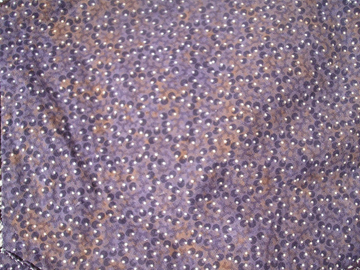
Quilt collectors are familiar with the way purple calicoes spot brown.
processes and brighter colors, but madder purple’s reputation
as a fugitive dye must have also been reason to experiment.
Quilt collectors are familiar with the way purple calicoes spot brown.

The sashing is turning brown
Unused swatches and blocks are often undamaged, but finished quilts
show purples fading to brown in small areas that seem to widen
with time (or more likely—more exposure to light).
show purples fading to brown in small areas that seem to widen
with time (or more likely—more exposure to light).


Quilt from about 1880-1910
Towards the end of the century, purple calico, once so fashionable, became a cliché used to characterize a country bumpkin, as in this description from an 1885 issue of Lippincott’s Magazine of a “Purple calico dress, made probably in 1877 or 1878, and worn and faded as such a garment might be after six months' country usage.” Emily Lennox’s fictional character, “That Little Rustic,” was described as attractive in 1883, “but, alas! she still wore an ill-fitting, old-fashioned gown of spotted purple calico.”
ZzzrBKBOl4C1LTdg~~60_3.jpg)
Purple, dyed with new synthetic dyes, became fashionable again in the 1930s. These dyes were more stable.

Most of the time.
Mills use completely different dyes today so don't worry about your purples spotting to brown today.


