QUILTS & FABRIC: PAST & PRESENT


Sunday, December 12, 2010

A Book of the Saints for Quilters


I've always wished I could paint well enough to create a little Renaissance-style masterwork (a rather major ambition). Photoshop has helped me achieve my goal in a way. I've been altering masterpiece paintings and entertaining myself by the hour.


Saint Ann, on the cover, is the patron saint of seamstresses


Now I have figured out a way to publish my digital doodling. I've created a book in Blurb, a print-on-demand publishing site.

Here's what you'll find if you go to this web page:
http://www.blurb.com/bookstore/detail/1836309


A Book of the Saints: For Quilters

Quilt historian Barbara Brackman has created 26 photo collages celebrating patron saints especially for quilters. Lost a scissors? Adding another UFO (unfinished object) to the pile? Worried about your reds bleeding? There's a saint for that.
 
St. Thomas is the patron saint of academia, including mathematics.
 He reminds you of the Pythagorean theorem,
which allows you to calculate the long side of any right triangle.

It's a 30-page paperback, just a little wisp of a book, a perfect gift for any textile artist.
It costs $15.95 plus shipping.
The only way to order it is from the online Blurb Bookstore.


St. Lucy's Day is December 13th.
She's the Patron Saint of Vision---
useful if you plan any counted cross-stitch

The Blurb books are so easy to do that I am sure I will publish many more from my new I'll Just Do It Myself Press. Check on my print-on-demand publishing empire by going to the online Blurb Bookstore(http://www.blurb.com/bookstore) every once in a while and doing a search for my name.

Friday, December 10, 2010

Morris Tapestry Project

It's hard to believe my patio ever looked like this picture taken in early November.
Fall is over! Annuals are gone and the hostas are asleep.
On the fence is Roseanne Smith's unfinished top of Morris Tapestry prints from Moda.

She's pieced squares inside of squares from precut Layer Cakes
 (10" squares) and added yardage for the setting.

Here's the plan drawn in Electric Quilt.
The quilt awaits a border.


For the setting strips she's using the print called Bachelor's Buttons.
 For the Morris Tapestry collection we've done it in six colorways.

William Morris designed it for wallpaper. Why this print is called Bachelor's Buttons I cannot tell.
It certainly doesn't look like the familiar cornflower, also called Bachelor's Button.


The leaves are much more like an acanthus leaf, a traditional image we find in classical Greek design, and in several other designs by William Morris.

Acanthus Leaf by William Morris
(this print is in The Morris Workshop collection from Moda)


Acanthus mollis:  leaves above and flowers below

The scrolling acanthus leaf is one of the basic images in ornament found in this 19th-century painted box and 18th-century tapestry below.


The leaf is found in columns from ancient Greece


and classical revival architecture everywhere.

BREAKING NEWS!
Kevin did some searching and found a ranunculus (a good word and a good garden plant)
that is called Bachelor's Button.


Here's another variety of ranunculus that looks a lot like the fabric.
So now I guess I'll reword this:

Morris's inspiration for Bachelor's Button might have been a ranunculus drawn with the traditional curving lines seen in classical acanthus leaves.

Thanks, Kevin!

See a piece of the original wood-block printed wallpaper in the Bachelor's Buttons pattern at the Victoria and Albert Museum's website by clicking here:
http://collections.vam.ac.uk/item/O248838/wallpaper-print-bachelors-button/

And read more about the acanthus leaf in William Morris's designs at the Earthly Paradise blog by clicking here:
http://www.theearthlyparadise.com/2008/04/william-morris-and-acanthus.html

Wednesday, December 8, 2010

Dogtooth Borders

Quilt by Anne Dagge, date-inscribed 1818
Collection of the Smithsonian Institution

I've been looking at a lot of quilts with the dates inscribed on them, working on my digital newsletter for 2011. One of the things that impresses me most is how popular the appliqued dogtooth border was before 1860, and particularly before 1830.

Dogtooth border on a tattered quilt from about 1850

When you see pictures of these triangular borders you might think they are pieced, but several years ago quiltmakers Elly Sienkiewicz and Judy Severson, researching quilts by reproducing antiques, realized borders of spiky triangles that look pieced in photographs were actually appliqued. Quilters probably slashed strips in regular fashion and turned the edges under to form triangles.


The source for the name Dogtooth seems obvious; canine teeth are sharp. The word is used to describe several pointed objects such as the Dogtooth Violet in botany and dogtooth spar in mineralogy. In her quilt research, Sandi Fox noted that dogtooth is also a name for an ornament in English gothic architecture, a type of quatrefoil detail found in medieval buildings.

1797
A Vandyke scallop or Portuguese hem on the right

Fox suggests the word Vandyke scallop might be a better name for the quilt technique. She found fashion illustrations in the 1790s featuring geometric borders such as a dress described as having a "chintz border in Vandyke scallops." A search of fashion illustrations from 1790-1820 will show many such clothing details.

Queen Henrietta Maria by Van Dyck,
 wearing a few scallops in the 17th century

Louis Harmuth's 1915 Dictionary of Textiles defines a "Van Dyke" as a "pointed scallop in laces and embroideries." The name comes from the paintings of Anthony Van Dyck, an artist born in Belgium in 1599. Van Dyck achieved fame as court painter to the English king when fashion dictated small pointed beards and elaborate clothing with v-shaped scallops on collars and cuffs. His name still describes a goatee beard, but the association with dress and embroidery has been forgotten.

Vandyke scallops in 1813

Fox also defined the edge as a Portuguese hem. A 1917 book Dressmaking: A Manual for Schools and Colleges described "Portuguese laid work" as a technique "chiefly used as a border decoration."

Cut-out chintz quilt with dogtooth border by Mrs. James Lusby,
 date inscribed 1837-1838
Collection of the Smithsonian Institution


A Star of Bethlehem with a dogtooth border, a photo sent by Jane Hall


One sometimes sees these double dogtooth borders in different colors

I tried to find a tutorial on the internet about how to stitch a dogtooth border (or a Vandyke scallop) but couldn't find any. Instructions are in two of my books and in Judy Severson's Flowers in Applique.
Below is a small illustration from my Quilts From the Civil War.

Begin with two strips of fabric, for example 
1 strip 4 x 20" inches of light
1 strip 2-1/2" a 20 inches of dark
Baste them together with a stay stitch on the bottom.
Mark every 2" on the top of the dark strip
Slash 1-1/2" down at those marks
Turn the edges under and applique them into a point. 

Erma's Wedding Quilt, by Judy Severson and friends
Judy does a very orderly dogtooth border

Nancy Hornback, Reunion Eagle
And so do Nancy and Karla
  
Liberty's Eagle by Karla Menaugh


Karla Menaugh, Sunflowers

Karla has included instructions for her plaid dogtooth border in my book Borderland in Butternut and Blue, available from Kansas City Star books. Click here to read more about the book:

 I love to find the dogtooth appliqued edge used in other ways
A quilt from about 1850 with a dogtooth top to the basket

And a dogtooth edge on a scallop from another mid-19th-century quilt


Here's a detail of a terrific album quilt
in the collection of the Winterthur Museum.

See more 19th-century quilts with dogtooth borders by clicking on the links:
Two from the International Quilt Study Center and Museum
Number 2008.040.0195
Number 1997.007.0688
http://cdn.firespring.com/images/a/2/4/a/6/a65515c7-2270-4a60-a8f1-6eb169f2d267.jpg

Another from the Winterthur
http://content.winterthur.org/cdm4/item_viewer.php?CISOROOT=/quilts&CISOPTR=455&CISOBOX=1&REC=3

Chirp, Barbara Brackman, 2010
Inspired by Anne Dagge's 1818 quilt at the top I put a wacky dogtooth border on my little Broderie Perse quilt of paisley birds.

Monday, December 6, 2010

AQSG Star Study

Eight-Pointed Star-Borden Family Quilt by Florence McConnell
41-1/2 x 37 -1/4"

See Florence's inspiration quilt by clicking here and scrolling down

Every other year the American Quilt Study Group invites members to study an antique quilt by reproducing it on a smaller scale. This year the theme was star quilts and members made 39 quilts, which you can see on the AQSG website. Click here: http://www.americanquiltstudygroup.org/qs_star_study01.asp


Nancy L. Losee, Star of Bethlehem
36" x 36"
Inspired by a quilt in the collection of Colonial Williamsburg
Acc. No. 2000.609.1
To see the original click on the EMuseum page for Colonial Williamsburg.
Do a quick search for the word Bethlehem. The inspiration quilt will come up as the second item.


Some studied quilts in museum collections, some were inspired by quilts in private collections and some by quilts they owned themselves.  
Cindy Vermillion Hamilton
Star of England
40" x 42"
Inspired by a quilt in her own collection


Most of the Star Study quilts were exhibited at the Houston Quilt Festival in a show that will travel around for the next two years. Kansas City Star Books is planning a book about them for the spring.

Bobbi Finley, Mennonite Lone Star
49-1/2" x 49-1/2"
Inspired by a quilt in a private collection


The schedule for the traveling exhibit:

January 3, 2011 - February 6, 2011:
Latimer Quilt and Textile Center, Tillamook, OR

February 25, 2011 - June 5, 2011:
Monroe County History Center, Bloomington, IN

July – August 2011:
New England Quilt Museum, Lowell, MA

September 17-18, 2011:
Faithful Circle Quilters Show, Woodridge, IL

November 2011 – January 2012:
Rocky Mountain Quilt Museum, Golden, CO

March 2012:
Dallas Quilt Convention, Dallas, TX

April – August 2012:
International Quilt Study Center & Museum, Lincoln, NE

The Quilt Study is only one of the many good reasons to join the American Quilt Study Group.
Join by clicking here:
http://www.americanquiltstudygroup.org/membership.asp

Saturday, December 4, 2010

Morris Tapestry Blues


I'm thinking snow
And indigo blue.

Variable Star block from about 1850 in an indigo blue print

Wey in the Kelmscott Indigo colorway
We're offering lots of blues in my William Morris reproduction collection A Morris Tapestry---a snowstorm of blues.


Designer William Morris loved indigo. He and his dyer Thomas Wardle (right) worked hard
to produce a variety of blues with the old fashioned dye.


Although we use synthetic dyes today we've also worked hard to get a good range
 of blues from light to dark in A Morris Tapestry.

You might want to start a winter project with a traditional star and a wintery mix of blues.

The blocks in these sketches are 10 inches. See rotary cutting directions below.
In both quilt designs the stars are set next to a second pieced block and use a variety of the blue prints.

Drifting Snow
82" x 82"


The alternate block is a square pieced of 2 half-square triangles, turned in 2 directions.
For 10" finished blocks cut squares 10 7/8" and cut in half diagonally.
You need 24 of these blocks, so cut 12 light squares and 12 dark squares.

Blizzard
82" x 82"
Same star arrangement but the alternate block is pieced of 4 triangles.


For 10" finished blocks cut squares 11 1/4" and cut into 4 triangles.
You need 25 of these blocks, so cut 12 light squares and 12 dark squares.

The lovely Japanese prints are from the Library of Congress collection. They have a large collection of 19th-century woodblock prints online.
Click here:

And see other posts about indigo blue and Thomas Wardle by clicking here:


Cutting the 10" finished star blocks:
For each quilt you will need 12 light stars and 13 dark stars.
For each star....
A Cut 4 squares 3".
B Cut 1 square 6 1/4". Cut into 4 triangles with 2 diagonal cuts.
C Cut 4 squares 3 3/8". Cut into 2 triangles with 1 diagonal cut.
D Cut 1 square 5 1/2".

Cutting the 6 inch finished border:
I'd use one of the large-scale prints.


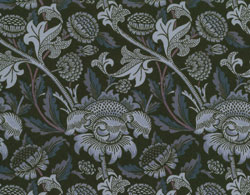
Wey has a diagonal direction;


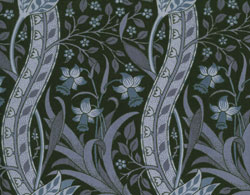
 Daffodil runs parallel to the quilt's edge and


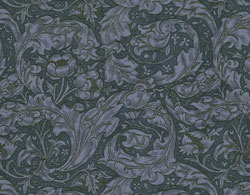
Bachelor's Button is less directional.
You'll need 2 1/3 yards. Cut the borders before the blocks and you'll have left-overs for the blocks.
Cut 4 strips 82 1/2" by 6 1/2".
Miter the border corners.