QUILTS & FABRIC: PAST & PRESENT


Thursday, October 15, 2020

Flora Delanica #1 French Rose


Flora Delanica #1: French Rose, Rosa Gallica by Becky Brown


We begin our Block-of-the Month Flora Delanica with a red rose, the traditional symbol of England (French Rose?)  Following Mary Granville Delany's story we'll learn a good deal about 18th-century English history. She was a child of her century, born in the year 1700 and dying in 1788. Below Mary's paper collage of the Rosa Gallica combined with a portrait of Queen Anne.

Queen Anne, a Stuart:
 "It can never be good for England to have a Papist on the throne."

Mary's tale begins in the days of England's Queen Anne (1665-1714), the last Stuart ruler. Anne came to the throne in 1702 when Mary was two years old. Anne's inheriting the crown from sister Queen Mary was a boon for Mary Granville's family who were Tory aristocrats and politicians. To simplify it we may say that the Tories were conservatives with their fates linked to the Catholic Stuarts, also called Jacobites. (Wait a minute! It's not simple.)

Suffice it to say that the men in the elite Granville family tied their ambitions to Queen Anne's family and in our Mary's youth they did quite well. Her aunts had been royal ladies-in-waiting, one to Anne and one to Anne's sister Queen Mary. The child Mary Granville was of proper birth and proper politics to look forward to an exalted position as a Lady of the Bedchamber or something similar for the new queen and that is how her young life was shaped, trained in the graces thought to create a lady who was an adornment to a royal court.

Autobiography, Mary Delany.

Queen Anne's heir, Duke of Gloucester
with a royal dog. William died the year Mary
Granville was born.

We are horrified to learn that by the time Queen Anne took the throne at the age of 37 she had suffered through 17 (or 18) pregnancies with only 5 live births. Only one son William survived early childhood but he died at the age of 11, perhaps from hydrocephaly, fluid in the brain, which could have been a symptom of many other conditions. Surely there was something terribly wrong in the royal genetics.

Anne herself was in miserable health, dying rather abruptly in 1714 at the age of 49. With no direct heirs and Catholics and Protestants vying for power, the Granvilles bet on the Jacobites, allying with the son of the last Catholic King James II. This James known as "The Old Pretender" ran a parallel court from France and Rome. Betting on him was a poor choice in the long run and the short.

Mary's Uncle George Granville, Lord Lansdowne 
never gave up on the Old Pretender even after Young Pretender Bonnie
 Prince Charlie's defeat in a 1746 British invasion.

The Granvilles were out when the Whigs and Protestants took over. England had few options for a royal candidate to replace Anne but there was a Protestant relative in Hanover, one of the small German states. Although dozens of Catholic relatives had better claims, King George I trundled up his court, his mistresses (not his wife), their ladies-in-waiting, his musician (Handel) and some of his Protestant children (the Hanovers did not get along with their children) and sailed for England, where his heirs rule today.

England's George I did not speak English.


Denniele Bohannon's French Rose

 At the age of 14 Mary Granville's future, which had appeared so rosy, was now rather bleak.

The Block 
French Rose


Applique on the diagonal to a square cut 10-1/2" or on the vertical center of a rectangle cut  9-1/2" x 12-1/2".


One Way to Print the Pattern:
Create a word file or a new empty JPG file that is 8-1/2" x 11".
Click on the image above.
Right click on it and save it to your file.
Print that file out 8-1/2" x 11". Note the inch square block for reference.
Adjust the printed page size if necessary.


Mary Delany's Rosa Gallica.
Her initials cut from paper are in the lower right.
Most of these photos are from the British Museum's site.
They have 970 of Mary's botanical pictures. 
See their beautiful photo here:


The Flora Delanica patterns are perfect for wool applique
as you can tell from Nancy Phillips's block.


A Little More Mary Delany

Each month we'll look at an extra collage from Mary's Flora Delanica. The British Museum has the best collection. You may want to draw your own designs based on hers.


Dianthus caryophyllus, a variety of Jersey Pink (We call them carnations.)


Extra Reading & Viewing:

Our most recent impression of poor Queen Anne is the 2018 movie The Favourite, with Olivia Colman playing the Queen.

Clarissa Campbell Orr published a biography
of Mary Delany last year.

Here's a preview:

Social Media

Our Facebook Group: MaryDelanyQuilt

We have our own Instagram page
#MaryDelanyQuilt


French Rose, Rosa Gallica by Barbara Brackman
I'm using various dark patterned backgrounds and orienting the florals on point.
I view this project as a contemporary Broderie Perse project so am using
fabrics that echo the shading and lines in Mary's collage.


Tuesday, October 13, 2020

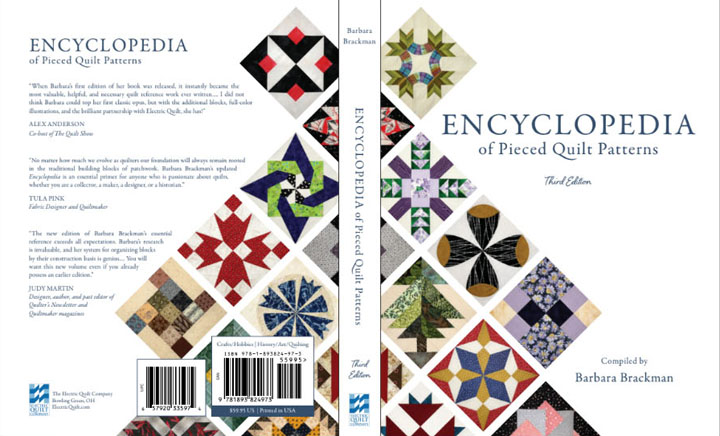
Cover Blocks: New Encyclopedia of Pieced Quilt Patterns

Sara Seuberling at Electric Quilt designed
the new 400+ page Encyclopedia of Pieced Quilt Patterns.

She's been sending me updates on design for months. I just realized where the images on the cover came from!

Doh!

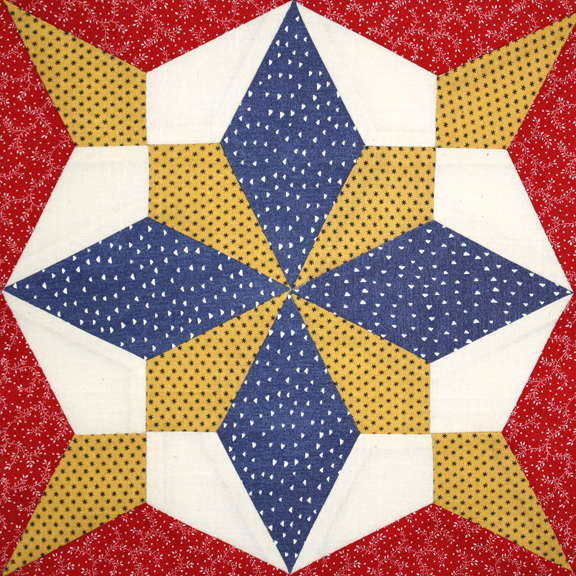
From you guys. You probably recognized your own blocks. A long time ago we asked people to mail in blocks made from the indexed patterns in the old book and BlockBase.

And you did, thank you very much.

Sally R. #854 Pine Tree Quilt from
the Laura Wheeler/Alice Brooks syndicate

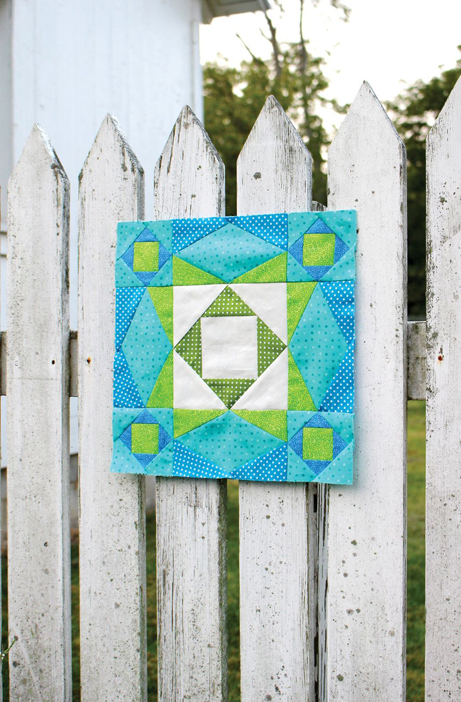
Sara and Jenny Novitsky took the blocks out into the neighborhood
to photograph. Here's Sally's Pine Tree out in the woods.


Joyce D.'s #2765, Arkansas Centennial from
the Kansas City Star

Barbara Burnham's #3872
Sacramento from Hearth & Home
(It's a good thing you guys are piecing these instead of me.
Look at all those points and they are perfect.)

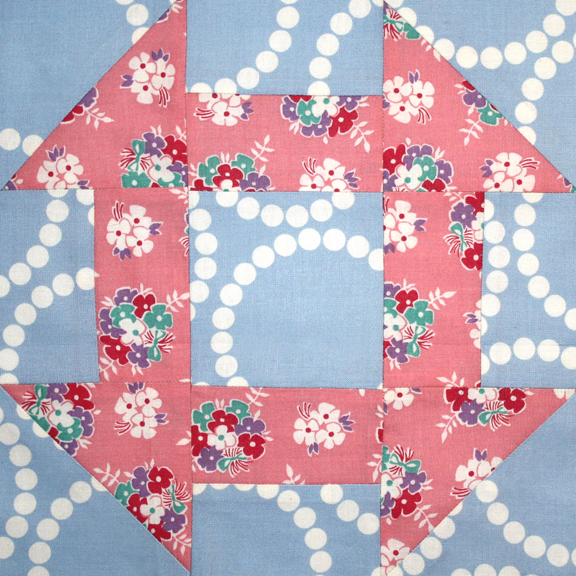
Addison's #1646a Churn Dash

Addison is 9 years old!
She has a good teacher in her grandmother Denniele.

Her block illustrates the page on how to figure out
the seam lines.

#1071 by Linda Simon, Storm at Sea
from Coats & Clark

Sara used these pretty shots to illustrate each
chapter. Linda's is for the chapter on patterns
that require a block and a sashing for the repeat.

#2846 by Brenda Plaster
Jack's Delight from Clara Stone catalog,
a Nine-X Block

1102a by Tony Schoen
A Four Patch
It's just a checkerboard of 16 squares but Tony shaded it innovatively.

And there are some on the back cover too.


I see #1627b by Jean Wall,
Texas from Nancy Page
A Nine Patch

#1644 by Anita Grossman Solomon
Another Nine Patch in dramatic fashion.

Anita's block got sliced by the binding; it's peeking out on
back and front covers.
Sorry, Anita.

We certainly appreciate your sending those blocks, stitchmeisters!


Friday, October 9, 2020

Green Calicoes in the Early 20th Century

Quilt dated 1903, Shirk

Green calicoes are among the hardest prints to date in antique quilts.
They were classic "bread & butters," the fabric that sold year after year
and paid the bills.

The S.H. Greene Company had a line of Washington Prints.
Green with yellow figures. Is that dark a black?

Green with blue and black

From Michigan State University
Green with white and black

Here are a few quilts dated in the 1900-1915 years with similar prints.

1903, Belle H.

Showing once again how hard these green calicoes are to date.

1904, Lizetta Schweitzer Coprio

I'd probably have dated these more like 1880-1900
but I guess 1880-1920 would be better.

1906, Clara E

1909 

1910, Grandma West

1911, H.Y.

1913, Ella Strouse, Mennonite Heritage Center

UPDATE: These green calicoes are NOT poison green; they are overdyed  with various nontoxic coloring agents.
Read more about true poison green here:

Tuesday, October 6, 2020

Betsey Haring's Quilt


Quilt by Elizabeth Bogert Haring known as 
Betsey (1811--1890) Dated 1869
Collection of the Bergen County History Museum
Anonymously donated in 1948

 Betsey Haring's unusual quilt remains in Bergen County, New Jersey where she spent her life, which spanned a good part of the 19th century. She was born on July 25, 1811 to Matheus & Maria Demarest Bogert and baptized soon after in Schraalenburgh (now Bergenfield).

When 16 she married Petrus David (or Peter) Haring of Tappan or Harrington, New Jersey, about 21, on July 5, 1828. In a few weeks Betsey gave birth to son David Peter in September and had three more boys and a girl over the next 18 years. Those children married Blauvelts and Onderdonks, further creating Dutch genealogy that only the local Holland Society can hope to fathom. 

The 1860 census lists Peter as a Farmer with $8,000 worth of land
and Betsey as "Mistress." Daughter Anna was married by then; the younger boys
 worked the farm.

The Harings lived in a house still standing at 
327 Tappan Road in what is now Norwalk.

UPDATE: See Regina's comment on how they spell Hering/Haring/Herring.

A cow, a rooster and cats on the table.
Betsey's pictorial quilt reflects a farm life.

Self portrait?
"Betsey Herring made this quilt while in her 57th year of age 1869"

Betsey occupied some of her 79 years in making quilts. She died on the last day of 1890 at her daughter Anna Maria Onderdonk's home in nearby Westwood. Her 1889 will lists seven quilts for children and grandchildren: A silk bed quilt worth $10 and six others valued at $6. This one may be her "album quilt" left to Anna.

"Betsey Bogert, wife of Peter D. Haring," is
buried in the family cemetery in Norwood near her farm.

A man in a horse-drawn sleigh, a Turkey and some birds.
The images are embroidered with labels.
This one says "Sleigh Riding" at the top.
The birds that look to be swans are labeled "Gees" and "Geese Pond"

"The eagle of America"

Betsey lived close to the Hudson River in
Northeastern New Jersey. The map shows what was once
New Netherlands, the Dutch colony in North America.
The star is Bergen County.

Betsey's Dutch community was important to her 200 years after Nieuw Nederlandt became an English colony in 1674. 

A table with a "Decanter"
and on the left 
"Flower of the Dutch mans pipe Meersham"

 Dutchman's Pipe plant

In 1833 when Betsey was in her early twenties New York writer Washington Irving took a trip into New Jersey. 

The Tappan Sea (Tappan Zee) a wide spot in the Hudson River.

After crossing the Hudson on a ferry he arrived in Tappan, New Jersey.
"Drive up Tappan Strat [Street]---number of dutch wagons...Women with Dutch sun bonnets---people talk Dutch---neatness of houses....Drove thro' Tappan---still, quiet little village....we pass thro' Harrington----very neat Dutch stone cottages. Ask an old lady whom we meet on the road to whom such and such belong---we find one was hers---compliment her on its neatness---quite a picture".
Many Harings lived along the Tappan Road.
Library of Congress, HABS photo, late 1930s.
House begun in the late 18th century.

Dutch ancestry linked people across political boundaries with communities along the Hudson River connected to neighbors on the other side of the state line. Northeastern New Jerseyites had more in common with Dutch New York neighbors than with people who lived in New Jersey's Delaware River Valley near Philadelphia.
The Old North Church, about 1940
Historic American Buildings Survey photo from the Library of Congress
People who lived in northern Bergen County had several 
Dutch Reformed churches tying neighbors together 
(although doctrinal issues seem to have driven them apart.)
 
No one has done a study of the influence of the Dutch Reformed churches in the Hudson Valley upon quilts, but there does seem to be a style associated with Dutch surnames. In a 1994 paper the Heritage Quilt Project of New Jersey discussed "Characteristics of Signed New Jersey Quilts 1834-1867" pointing out design elements.
 "The early 1850s marked the beginnings of original applique design, and by the late 1850s and early 1860s these designs became more personalized, especially in the northeastern counties. This new style emerged when quiltmakers began to record everyday activities...Three quilts in particular---all from northeastern Bergen County [including Betsey's]---are examples of such personalized designs."
The boat is labeled "Chinees Boat," the wreath "Ring Fan"

"A woven and appliqued strawberry basket is representative of the [local] strawberry trade which reached its peak just before the Civil War."

"Strawbary Black Bary Baskets" reads the label.
Bergen County was New York City's garden.

Bergen County strawberry basket for
transporting berries to market.


For their paper Rita Erickson & Barbara Schaffer created a timeline map showing how signed quilts originated in southern New Jersey in the Delaware Valley before 1844 (triangles) with Bergen County quilts (I added the yellow) appearing after 1858 (stars) in the Hudson River Valley up by New York state. These northeastern New Jersey quilts have more in common with New York samplers than with Philadelphia's albums. For that difference we can probably thank New York's proximity but also the common Dutch culture along the Hudson.

Betsey Haring's quilt is quite unusual in the format she used.
Most of her blocks include a central dot and rotating branches full of images,
almost like a windmill. The images, the birds, strawberries and the dog? (or cat),
are familiar in albums from the area.

"Buggy" from Betsey's quilt

My observation about regionalism in sampler albums has long been: "If there's a horse on it, it's from New York," but I am rethinking:
..."It's from New York or northern New Jersey."

Beginning in February I am going to post patterns for a New York-style sampler in Civil War style. There will be a horse, a butterfly, a dog etc. Look for Ladies' Aid Sampler next year.

International Quilt Museum Collection

Dog with a basket (a strawberry basket?) from a New York
quilt attributed to Dutchess County along the Hudson.

Maybe we should call it Hudson River Dutch style.

"Ring Fan"

See Rita Erickson's & Barbara Schaffer's paper "Characteristics of Signed New Jersey Quilts 1834-1867," which was published in On the Cutting Edge (Oral Traditions Project 1994).

See more about Betsey's quilt: