QUILTS & FABRIC: PAST & PRESENT


Sunday, December 13, 2009

Chrome Orange


This week the topic of my subscription email newsletter The Quilt Detective is chrome orange and chrome yellow. I have a disk, courtesy of Kathy Sullivan, that features quilts with chrome orange, what we today call cheddar. Kathy gave a Roundtable Session at the American Quilt Study Group meeting in October about the topic and she generously gave each participant a disk with the quilts in question. She gave me permission to use them.


Kathy collects cheddar quilts and quilts made in North Carolina, and many of these quilts fit into both categories.


This one is calling her name.


Another thing she collects is quilts and information about quilts made in this unusual pattern found in North Carolina. This one's appliqued to chrome yellow.


Thanks to Kathy for the entertainment.

Friday, December 11, 2009

Document and Reproduction Prints: Foulards


Every Civil War reproduction collection needs a foulard or two. Above are two from my newest Moda line Civil War Homefront.

In my book America's Printed Fabrics 1770-1890 I discussed foulards:

One distinctive print style is a small isolated figure set in diagonal repeat. Figures fall in a half-drop repeat with rows aligned in staggered fashion, giving the over-all effect of a diamond grid. The figure may be a flower, leaf, paisley cone, or motif so abstract it is identified only as a mignonette (little fancy). The print style with its diagonal, neat design is also known as an Indienne, a copy of an Indian-style print. And, because these prints were so fashionable for scarves, the French word for scarf, foulard, came to mean any half-drop print of isolated small figures. In the years between 1840 and 1865, Americans craved foulards to the point that they became a standard for American clothing and quilts.


Portraits from the 1860s featuring dresses with foulard style prints


Quilt block from about 1850-1860 with a light foulard-style dot and a dark foulard-style geometric
 
Below are two foulard style reproductions from the Civil War Homefront collection with the original document prints.


You'll note we changed the colors a bit, toning down some of the reds. You'll also see that the originals are sharper, one advantage to the old-fashioned copper roller. Mills use screen printing today, which creates a softer edge to the figures.


For more about America's Printed Fabrics 1770-1890 check the publisher's website by clicking here and scrolling down to the bottom:

It's been translated into French too.

Below: Gretchen in Atlanta has posted a photo of a "Hidden Stars" quilt top made from a Layer Cake precut package of Civil War Homefront on her blog Stella Bella Quilts. The pattern is from Pam & Nicky Lintott's Layer Cake, Jelly Roll and Charm Quilts. She added yellow yardage for the stars to the Layer Cake's 10-inch squares. You can see how the foulard prints add a grid of pattern.


http://stellabellaquilts.blogspot.com/2009/12/hurling-through-december.html 
 

Saturday, December 5, 2009

The Perfect Thirties Quilt


Denniele Bohannon sends photos of the old top being quilted by the Harrisonville (MO) United Methodist Quilters. It's a postage stamp quilt with all the squares about an inch in those sweet pastels so popular in the early 1930s. According to my Encyclopedia of Pieced Patterns, variations have been published under several names, among them Rainbow Round the World and Aunt Jen's Stamp Quilt.


I've seen kits for this quilt design with each piece pre-cut and sorted into a box like a Whitman's candy sampler box, but I imagine most of these postage stamp quilts were pieced from the neighborhood scrapbag.


Clockwise from the top: Rita Benson in the blue shirt, Lee Cunningham, Alice Law, Mildred Randall, (founding member of the quilters who is 94). Not pictured Ellen Wray and Denniele who took the photo.

Denniele writes:

We meet every Monday and quilt. Usually we break for lunch and return to quilting. The money raised is given to many causes. Most recently, we were a Silver sponsor of our local Relay for Life, donated to our two local food pantries, a backpack program for school aged children in need and the Women's Life Choice Center in Harrisonville. We make an annual donation to the Festival of Sharing as well. There is usually a waiting list and it takes about a year to reach the top!

Quilts we have quilted for others have won a blue ribbon at the Missouri State Fair and at the Osceola Quilt show.

Tuesday, November 24, 2009

Indigo Prints: Resist and Discharged Figures


Julie in Tennessee sent me blocks removed from an old comforter cover. She'd received them from a friend who was a member of the Shields family of Cades Cove, Tennessee. The pattern is one I haven't seen.
The blocks look to be from 1890-1920 when indigo prints were relatively inexpensive and very popular with quiltmakers. They show typical indigo coloring with a dyed blue background and white figures, style dictated by indigo's chemistry. Indigo will not color if it is exposed to oxygen, so simply applying indigo to a wood block or copper plate does not work because the dye binds with the oxygen in the air.


Here's a date-inscribed quilt from an online auction with indigo blue as the ground and white figures in the print. It's a typical early 20th-century factory printed indigo.

Printers traditionally print white figures on indigo grounds in a reserve or resist process (also called batik) by applying wax or a resist paste in a pattern on the fabric and then dipping it in the indigo dye vat. When the paste is removed a white on blue design appears. Another technique developed about 1800 involves dyeing the fabric blue in the indigo vat and then printing a discharge paste to bleach out the figures. The prints in the Cades Cove blocks and Aunt Celia's quilt are probably done in a sophisticated variation of the discharge technique (although the pattern design is rather unsophisticated).
The indigo resist process has been used by artisans all over the world. Pennsylvania historian Trish Herr has been collecting early indigo resist prints from the Germanic people there. These are hand printed rather than factory printed.


And Japanese printers still dye in traditional fashion.

This quilt is called Japanese Coins, made by Georgann Eglinski from Japanese fabrics, 2009.

Printers figured out ways to reverse the figure/ground appearance in indigos. The earliest technique was the labor-intensive process of applying resist paste to the background and leaving the figures to absorb the dye. These indigo resist prints are sometimes called China blue prints because they look like a piece of porcelain.

Elizabeth Richardson Collection. Western Kentucky University Library

Above: a scrap of old indigo resist with blue figure and white ground from quilt historian Florence Peto's collection. She gave it to collector Elizabeth Richardson several decades ago. Recently, quilts, correspondence, and scrapbooks belonging to Elizabeth Richardson were donated to the Western Kentucky University Library. The note says "Very old blue-on-white resist print. F. Peto. For your collection. Happy Easter!"

Here are some reproduction fabrics imitating China-blue style with blue figures on white grounds.


A sofa upholstered in indigo-resist reproduction from Ikea

To see more reproductions do a websearch for the words: fabric indigo resist.

To see more about the quilt collection at Western Kentucky University click here for their online exhibit

And see how indigo yarn is dyed in a recent dyeing workshop in the Navajo nation by clicking here:

Sunday, November 22, 2009

More Reproduction Quilt Bloggers

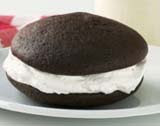
A few weeks ago I asked for suggestions for reproduction quilt blogs. Readers came up with many, particularly in Europe. I spent a lot of time scrolling; learned a lot, even if I couldn't always read the language. I now know how to enlarge a photo in html code and how to make a whoopee pie, a New England delicacy I didn't even know existed until last summer.


Here is the list:


One of the Mary Mannakee blocks from Deb's "Needles, Sticks & Hooks" blog

Deb's working on several series quilts including the Mary Mannakee quilt. To see what the Mary Mannakee quilt looks like (it's a signed album quilt in the collection of the Museum of the Daughters of the American Revolution) do an images web search for the three words Mary Mannakee quilt. Everybody's doing it.
Buy a pattern at the gift shop at the Museum of the Daughters of the American Revolution.
http://www.dar.org/museum/shop.cfm


Laurie at a Yankee Quilter:
http://ayankeequilter.blogspot.com/

Vicki and Jan: "Quilt Buds Share a Blog"
http://whataloadascrap.blogspot.com/

Jan in Chicago:
http://bemused.typepad.com/

Lori in Oregon:
http://humblequilts.blogspot.com/

Tracey:
http://decafplease.wordpress.com/

Priscilla's Workshop:
Here's a gallery of her reproductions. She's just finished the Bird of Paradise (Civil War Bride) quilt.
http://pws.blogsite.org/workshop/gallery.php


Reproduction from Embruns et Petit Points
 Mamifluer's Embruns et Petit Points:
http://mamifleur.canalblog.com/
See her posts on an Exposition de copies d'anciens in May 2009 (My translation: A Show of copies of old things)(?)


String quilt from Quiltfuchs
From Germany
http://quiltfuchs.blogspot.com/

From the Netherlands
http://www.jeanneke.com/
http://kijkdaaris.web-log.nl/kijk_daar_is/
http://prinsart.web-log.nl/weblog/
http://www.supergoof.web-log.nl/
http://lucyquilting.blogspot.com/

Wednesday, November 18, 2009

Paisley Prints

No Civil War reproduction line would be complete without a paisley print. My new Civil War Homefront features a paisley set in a neat grid, design that was fashionable in the early 1860s. In keeping with the theme of make-do recipes the print is called "Cracker Pie."


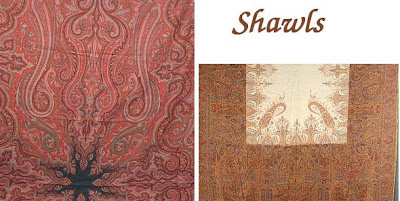
Paisley, like so much of Western fabric design, is an adaptation of traditional Indian textile pattern. The figures were found in cashmere shawls, which England’s East Indian Company began importing in the mid-eighteenth century. Hand-woven Kashmiri shawls became a fashion rage among the truly wealthy, a wearable status symbol. One shawl might cost the equivalent of a London house.


Paisley, Scotland

The industrial revolution was all about factories imitating handwork. By 1840, European factories were imitating shawls on automated Jacquard looms. The best were made in the town of Paisley, on the west coast of Scotland. The original Indian shawls featured a good deal of white, but Europeans preferred wools dyed in shades of madder browns ranging from dark chocolates to orangey reds, so the later manufactured shawls were darker than the Kashmiri originals. Factory-made shawls were priced in reach of the new middle-classes, and in the mid-nineteenth century everyone wore them.


This woman, wife of an English war veteran, wears a factory-made shawl in a photograph from about 1860.
The characteristic figure in the shawls was a stylized botanical form, an oval shape with a curl on the end, known as a botha or boteh (from the Hindi buta for flower). The botanical source for the boteh design is in some dispute. Textile historians see it as a pinecone, a gourd or the shoot of a date palm.


An Indian wood block featuring three boteh figures


The cone shape came to be known as a paisley after the Scots town and was a popular figure in cotton prints. During the 1860s and '70s paisleys in madder-style colors---warm, reddish-browns---were particularly fashionable for robes and quilts for the up-to-date boudoir.


Read more about paisley prints in my book America's Printed Fabrics: 1770-1890.

Click here to read an online article about paisley: Beyond the Fringe by Meg Andrews
And see a Scottish design for a paisley: http://www.archiveshub.ac.uk/textiles-paisley.shtml

The Museum of Printed Textiles in Mulhouse, France has a new exhibit on paisley and cashmere shawls opening this month. Dreams of Cashmere, Cashmeres of dreams: The Cashmere Shawls printed in Alsace in 19th century will be up until October 31, 2010. Click here to read more about the exhibit:
http://www.musee-impression.com/gb/expositions/default.html

Saturday, November 14, 2009

Hewson Textiles and Cuesta's Lists


John Hewson was a fabric printer in Philadelphia from 1774 to about 1810. He is best known for panels featuring a a floral bouquet in a footed urn surrounded by butterflies and birds. The panels were popular enough that many have survived in quilts and coverlets.

In 1999 I corresponded with a New Mexico family that inherited a previously undocumented quilt with a Hewson panel. I should have rushed to New Mexico when I received a snapshot in the mail ten years ago and photographed that quilt in better light on a quilt rack, but I didn't. Later efforts to find it have been futile. My correspondent has since died, but she knew it was a Hewson panel and I am optimistic the quilt is in good hands. As far as I know, this is the first time the quilt has been published.

Toile quilt with Hewson panel. Estimated date: 1780-1810. The panel is set in a border of faded pink calico triangles with Hewson birds in the corners. The outer border is a pink toile, a large-scale aborescent (tree) print with birds.

At the American Quilt Study Group seminar last month I organized a roundtable discussion about John Hewson and America's Earliest Calico Printers. You can read the handouts describing Hewson's legend and life and lists of the other printers on my webpage. There are also links to pictures of several Hewson quilts in museum collections. Here's a link to my page on Quilt History.
http://www.barbarabrackman.com/faqs2.aspx

Quilt historian Cuesta Benberry loved making lists and she kept an ongoing index of Hewson quilts. The last list I find in her correspondence, dated 1994, listed 17 Hewson textiles, far more objects than attributed to any other eighteenth-century American manufacturer. In 2008 Kimberly Wulfert published her list of 28 surviving textiles attributed to Hewson.

The pictured toile quilt brings the number of attributions to 29. At the AQSG meeting a friend mentioned she had recently noticed a quilt with a panel in a museum collection, where the staff were unaware of the fabric's origins. This makes 30 Hewson textiles. Cuesta would have been thrilled to add to her list.

Cuesta Benberry in 2006 with a Pineburr quilt at the St. Louis Art Museum

Click here to see a Hewson quilt in the collection of the Smithsonian Institution.
http://americanart.si.edu/images/1998/1998.149.2_1a.jpg

The Museum at Michigan State University will open an exhibit about Cuesta Benberry's research called Unpacking Collections: The Legacy of Cuesta Benberry, An African American Quilt Scholar on December 6, 2009. Their website describes it: "An overview of the collections of one of America's important collector/scholars ... a selection of textiles, rare books, patterns, ephemera, and samples of her personal journals, correspondence, and extensive research files." After this installation in the Heritage Gallery the exhibit will begin a national tour. Click here for information:

http://museum.msu.edu/Exhibitions/Upcoming/TheLegacyofCuestaBenberry.html

Kimberly Wulfert has a page on her website devoted to Hewson. Click here:
http://www.antiquequiltdating.com/John_Hewson_and_the_French_Connection.html