Sunday, January 30, 2011

Road Trip to Moda


During the January thaw I drove down to Dallas to the Moda/United Notions offices.

We packed the dog, the dog's suitcase and a lot of snacks.


Got there on a lovely 65 degree day.


Come inside!

The lobby

I dropped by everybody's offices.

Here's Cheryl the Design Director on the phone.

Jamie her assistant

I bet if I go back in six months
Jamie will have this stool covered with yarn.


The quilt in Susan's office window looked familiar.
We've been working on it for six months.
It's called Northern Lily/Southern Rose made from Civil War Reunion prints.
Look for posts about it in March.

Susan's the graphic artist who designs the kit boxes and suitcases
 as well as project quilts, etc. 

My destination was the resource library.

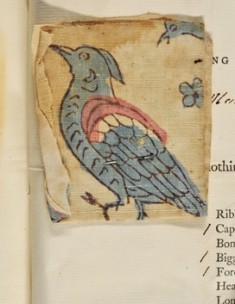
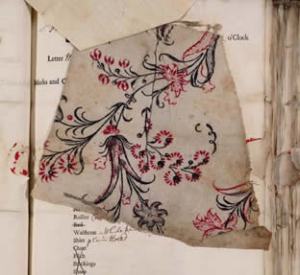
They have a lot of antique fabric!


My particular goal was to go through the antique swatch books
 and see what I could find to reproduce.
More on what I found in there later.

Thursday, January 27, 2011

More News From Arnold


Arnold is recovering from his heart attack last summer. He sent photos of a reception that a local quilt shop hosted in November to celebrate the Moda fabric collection named for him. Friends and neigbors came to say hi. This is his cousin Cheri who made him a miniature Christmas stocking from the selvages from the fabric line.


The shop is Angelics:
A Quilters Haven in Canton, Ohio

Many of you sent get-well notes after the heart attack. They were greatly appreciated. He sent well-wishers a handmade reply.

And I received a handmade Christmas card of antique prints.


Arnold's Attic came out last fall. It reproduces
 turn-of-the-20th-century prints from Arnold's stash in his attic.

Here he's sitting in front of a top made from the collection.

Here's a free pattern for this Ohio Star Puzzle.
 Click here to download a PDF.

I found another quilt made from Arnold's Attic prints
 at the Etsy store called Pieces of Pine.
If you still have your Jelly Roll strips this strip quilt
 would be a good way to use them.

Arnold says he's doing well. His many friends are glad to hear it.

Read about the heart attack at this September post.
http://barbarabrackman.blogspot.com/2010/09/news-of-arnold.html

Monday, January 24, 2011

Civil War Reunion & Memorial Quilts


[I'd intended to post this information about reunion and memorial quilts today even before I'd read the statement about the missing eagle in a similar quilt discussed in my last post. The flag quilt in that January 22nd post might better be interpreted as one of these veteran's quilts rather than as a message about racial equality.]

One occasionally comes across an antique quilt with Civil War Reunion images.
They are often crazy quilts, popular in the 1880-1910 period when reunions of the Union Army and the Confederate Army were annual events.

Commemorative ribbons were passed out at the encampments. A crazy quilt is a good place to preserve the printed silk souvenir. 

Florida Reunion of Confederate Veterans


Quilts with veteran's group connections were made for other reasons too.

The San Jose Mueum of Quilts and Textiles
owns this wonderful 1892 example made by the
Ladies of the G.A.R. in San Jose, California.

The GAR was the name for the largest Union veterans' group---Grand Army of the Republic.


This one was made as a gift for Hattie Burgess Shattuck
 by the Ladies of the Grand Army of the Republic,
Anna Ella Carroll Circle No. 1, San Jose, California

See more about it by clicking here
http://www.cqmagonline.com/vol09iss2/articles/994/index.shtml


About 1910
Very often the Ladies Auxiliary was present at the events.
Notice everyone is wearing a ribbon with a medal, even the child on the right,
 although no one is wearing a uniform.
(Those old uniforms probably didn't fit at this point anyway.)


Mid 1890s

This block in a crazy quilt seems to recall an 1893
 Blue and Gray reunion with soldiers from both sides.


The embroidery says:
Reunion
Confederate
Survivors
Greenwood (?) S.C.
July 4th
1893.?
It  looks like someone embroidered over a printed silk ribbon, which eventually wore away.


Here's a detail of a wool embroidered comforter dated 1910 with the letters G.A.R. The photo is black and white. The piece seems to have uniform buttons stitched to it and it may be cut from scraps of an old Union uniform. (I'm always doubtful about supposed uniform scraps but this memorial quilt actually might have some.) This coverlet seems to have been a memorial to an individual veteran. 

See more about wool tied quilts from the early 20th century by clicking on this post:

Here's a link to another crazy quilt with reunion ribbons:

Here's a short glossary to initials:
GAR- Grand Army of the Republic (the largest Union veteran's group)
WRC- Women's arm of the G.A.R., the Women's Relief Corps
UDC - United Daughters of the Confederacy)
CSA - Confederate States of America
UCV - United Confederate Veterans


Collecting Civil War reunion ribbons is a nice textile focus.
They are usually silk and need some TLC to survive.


Saturday, January 22, 2011

Interpreting Old Quilts

This patriotic quilt seems to be the hit of the Winter Antiques Show in New York this week. It's being shown by Stephen Score Antiques from Boston. Ken Johnson, reviewing the Show in Friday's New York Times had this to say:

"Some works have fascinating back stories. Research suggests that a quilt at Stephen Score, with a square, centered field of white stars on blue, surrounded by red and white stripes, with a border of abstracted yellow eagles---one of which is missing in the lower right corner---was created in 1880 as a past-abolitionist reminder that the project of achieving racial equality in America was not yet complete."
"A Smorgasbord of Fine Art, the Strange and the Old."
New York Times, January 21, 2011, C30

See the review by clicking here:

If it's in the New York Times---it must be true.
There does seem to be a missing eagle in the lower right corner. But we cannot presume to know why.

I haven't seen the quilt, but it looks like the eagle has been removed. From the photograph the quilt looks to be late-19th century and probably a Civil War memorial quilt, one of a good body of such quilts---more of these in my next post.

Here's a description of the quilt from the blog GoodbonesGreatpieces.
"exquisite Freedom Quilt, hand-pieced, appliqued and quilted. From about 1880. Hand embroidered in red below the blue field of stars: “Hope of our country” “The Star of Freedom: “M.W. L to C.M.L” These words are attributed to the American abolitionist Harriet Beecher Stowe. Made by a member of the Lewis Family of Boston, MA, and Saint Louis, MO. " 
See more at this post:
http://goodbonesgreatpieces.com/blog/?p=11678

This story seems to be a combination of two common myths in interpreting antique quilts. One is that the quilter set up a repeat and then deliberately broke the pattern as a sign that she did not assume perfection. 
The other myth is that quilts were used as codes or maps to freedom during the time of the Underground Railroad when abolitionists assisted escaped slaves.
 
Here we have a "deliberate mistake" as a "post-abolitionist code."
 
It's an opportunity to remind everyone that historians efforts to debunk these myths of interpretation can only go so far. Myths endure. Myths endure because they tell us about who we want to be. And now we have a new one.
 
It's in the New York Times.

And in an update 3 hours later: Today's New York Times blog post at the "Opinionator Blogs Disunion" has a very well written argument against the exact same kind of "Research suggests that...." in the above copy in the newspaper article. My writing teacher told me never to point out irony. So I won't. Read this:
http://opinionator.blogs.nytimes.com/2011/01/21/teaching-civil-war-history-2-0/
 
See an earlier post about the so-called "deliberate mistake" by clicking here.
http://barbarabrackman.blogspot.com/2010/08/hoo-doo-humility-and-deliberate.html
 
And see a resource page on my website dealing with myths about Underground Railroad quilts by clicking here:
http://www.barbarabrackman.com/faqs4.aspx
Read a paper I gave at the American Quilt Study Group several years ago about interpreting symbolism in antique quilts here:
http://faculty.culver.org/~foleyd/Teacher_files/craftingfreedom/rockyroad.pdf

Friday, January 21, 2011

Michele Hill's More William Morris Applique

Michele Hill's second book on William Morris applique is out!

Here's the cover quilt Morning Glory.
She certainly made good use of the reds in The Morris Workshop line.


The border, featured on the cover, uses the Iris print
by John Dearle from that 2010 Morris Workshop collection for Moda.
Read more about the print here at my blog post


Thanks, Michele.

The subtitle is
"Spectacular Quilts and Accesories for the Home"
Here's a specatacular quilt
Floral Fantasy.
Not in the usual Wm. Morris range


And some accessories Willie woulda loved
Journals

See Michele's blog
William Morris and Michele

She has information about her fabrics and publications.

The new book is Australian so it will be awhile before
 it's at your local quiltshop if you're in another hemisphere.
Keep checking
and ask your quilt shop owner to check with her usual distributors.


Here's Michele's first book.

My current William Morris reproduction collection in shops now is A Morris Tapestry.

Tuesday, January 18, 2011

Madder Style Prints

Star quilt with madder-style setting blocks and border
 1840-1860
In the quilt above, the quilter combined indigos, Prussian blues and other fashionable fabrics with madder-style prints in the blocks. Madder browns have an unfortunate tendency to deteriorate or "tender" fabrics. The darkest brown in the quilt above, mordanted with iron, has oxidized, leaving large holes where the dark stripes were. The batting is showing through.


A detail of the star quilt.
 It's an interesting quilt because of all the mismatched strips added to the triangles to make them fit. And doesn't that madder-style print at right look like tiny rotary cutters???


Madder-style prints were popular for clothing and quilts---
the fabric of everyday mid-19th-century life.


These young women photographed with their books
in the 1860s are wearing prints that might have been dyed with madder.

Cottons dyed with madder are among the most common fabrics in nineteenth-century quilts. Madder pleased both mills and customers because it was colorfast and inexpensive, yet versatile.

Dye from madder root could produce the bright orange,
the paler and duller oranges and the chocolate browns in these prints.

The calico printer treated the yardage with different mordants (metal salt solutions such as iron or aluminum) and dipped the cloth in a single dye bath made from madder root. Each mordant reacted differently with the dye, producing colors ranging from red-orange through purple, brown, and almost black. The madder coloring agent would not bind to areas that were not mordanted.


Madder is a vegetable dye derived most efficiently from a perennial plant with the Latin name of Rubia tinctorum. Like many dye plants, it is an Asian native. Pliny the Elder, a Roman naturalist who traveled to Asia in the first century AD, described the amazing transformation of a piece of cloth treated with colorless mordants emerging from the dyebath in a rainbow of shades. The plant and its secrets traveled to Europe where madder thrived in Italy, France, Holland, and Spain. Other names for the dye are al izarin in Arabic and garance in French.

Madder produced a plum colored purple known as puce.

Madder was particularly popular with quilters between 1840 and 1890.

Madder dyeing produced a brick red or orangey-red,
not the bright red that the Turkey red process did. The browns tend toward reddish.


Photograph from the late 1850s(?)
A print skirt and a big dog.


Reproduction Quilt
Sorghum Taffy Strip Quilt
made from my Civil War Homefront collection from 2009.
Blues and honey-colored yellows accent the madder-style prints.

Prints from two Moda collections: Civil War Homefront and Civil War Reunion

In my latest Moda reproduction collection Civil War Reunion I've colored several prints in a Dusty Rose colorway with an authentic madder orange. It's a shade to buy when you see it as the color so popular in 1860 might not be available in the future.